
Awaken to What Is Already Here
Advent Week 1 - Beauty
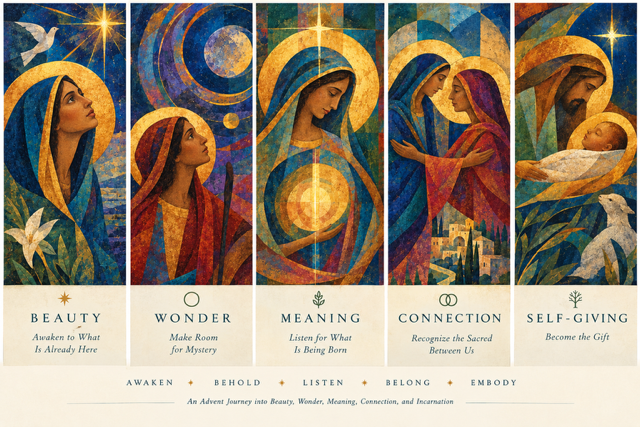
This Advent, ICN invites you on a journey into Awe.
In addition to our weekly Saturday emails, we offer a daily devotional companion to deepen your experience of awe throughout the season and into Christmas.
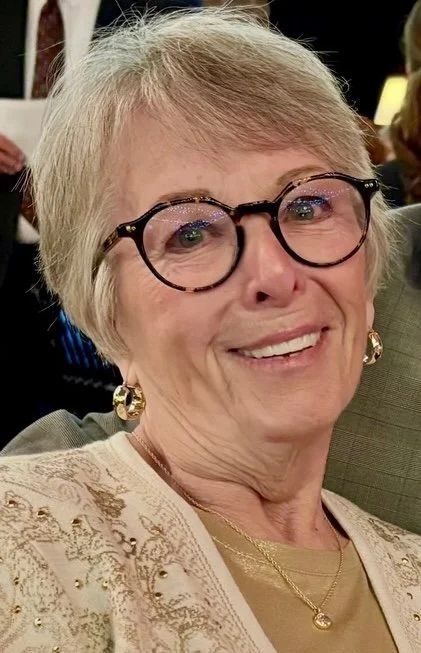
These offerings come to you from Connie Wilson, a member of the founding WeSpace of ICN, a founding board member, and part of the WeCreating Circle. She is passionate about building deep relationships. Journeying together in community has been one of the great gifts of ICN.
Perpetual learning has been a high priority, seeking to study across disciplines and spiritual traditions. Transformation, especially in times of uncertainty and transition, is a primary focus. She seeks to work with all generations, having a concern for the younger generation and all that they face. And, is now involved in Eldering communities - developing retreats, experiences, and resources for the older generation focusing on Elder Spirituality. She sees herself as a “midwife” for what is coming into being and a transition “doula” for what is dying away.
Connie is an ordained clergy person, spiritual director, Internal Family Systems coach, a Benedictine Oblate, and the director of Companions - on The Journey.

Advent begins in darkness. The days grow shorter and the imagination turns toward the Mystery of light emerging within the darkness. Darkness is not something to escape. It is a companion… helping us see differently.
When familiar sources of certainty fall away, when our plans fail, when grief unsettles us or becomes a companion or the future is unclear, we may discover that our usual ways of seeing are not enough. We can become more attentive to the subtle, more receptive to what cannot be managed or controlled, and become more aware of the ordinary gifts that sustain us.
An ordinary candle becomes more than a candle. Holding a hand becomes more than a gesture. A familiar voice brings comfort. A breath received and released becomes an experience of gratitude. The darkness has not changed. Our capacity to perceive what is already present (in and through these things) has deepened.
The prophet Isaiah (Isaiah 9:2) speaks to people walking in darkness who have seen a great light. The Gospel of John (John 1:5) declares that the light shines in the darkness and that the darkness has not overcome it.
Advent invites us into this kind of awakening. We are not asked to manufacture light or deny darkness. We are invited to become available to the light that shines within it…
Incarnation of Beauty
What if Advent is preparing our eyes to see mystically? What if Incarnation means that matter itself is capable of revealing divine presence?
Awakening to beauty touches something central in ICN’s understanding of incarnation.
Christian faith proclaims that divine life is not distant from human life. In Jesus, the Word becomes flesh. The eternal becomes embodied. The divine is encountered not by escaping material existence, but through a particular human life, living among us (Emmanuel).
This Mystery invites us to consider our relationship with the material world. Matter is not an obstacle to Spirit, but a means through which Spirit becomes manifest. The body, the earth, our relationships, and the ordinary circumstances of daily life are not distractions from divine presence, but places where we encounter it.
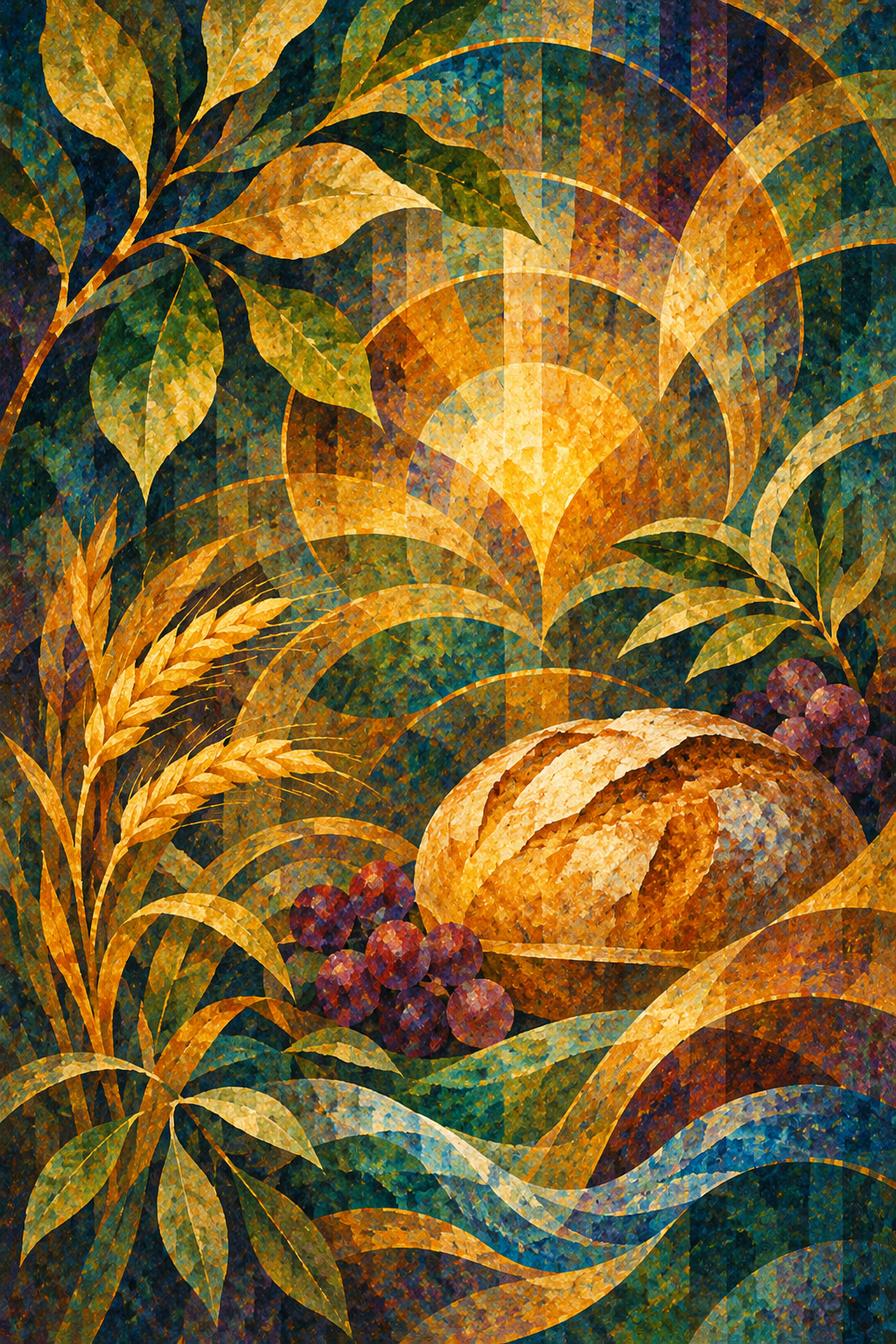
A tree reveals the wonder of creation. Bread nourishes us physically and when shared, becomes an expression of Communion. Our bodies become places of divine encounter. The incarnation invites us to discover the wonder of holiness within embodied life.
The manifestation of Christ in and through the world and creation, and our awakening to participate in that manifestation is our mutual Christophany. We become more capable of recognizing and embodying Christ’s presence as we grow in awareness of the divine life permeating our relationships, communities and the world.
This does not mean that everything we encounter is good, that suffering should be minimized or that injustice should be accepted. Rather, it means the world is asking for our attention. Creation is not material for our purposes. Other people are not objects to be evaluated or used. The earth is not simply a resource. All are worthy of reverence. We are learning to see. Beauty awakens reverence and awe.
Beauty in/for Community
BEAUTY is not a private spiritual experience. It transforms the way we inhabit life within community. When we attend to another person, we perceive more than their identity, opinions, or difficulties. We become aware of the depth and mystery of the person before us.
This kind of seeing is especially important for the ICN community. We can sometimes gather around shared ideas and practices while remaining unseen by one another. We can discuss the sacred mystery while overlooking the divine life embodied in the person speaking.
What happens when we approach one another with the attention we bring to a beautiful landscape or a sacred work of art? What if we listened without preparing our response? What if we allowed a person’s story to affect us without interpreting it? What if we became curious about the beauty, courage, vulnerability, and wisdom to create space that invites what might be emerging?
In such moments, beauty becomes relational. We discover that revelation is not only something we experience individually. It emerges in the space between us, among us – in the listening, the silence, the shared laughter, the tears, and the mutual recognition of our common humanity.
Community becomes a place of spiritual formation when we learn not only to speak about divine presence but to encourage it, witness it, and behold it in and for one another. This too is an expression of mutual Christophany.
As a community, we prepare for Christ by learning to recognize the ways divine life is already becoming visible among us. We allow beauty to interrupt our habits of inattention. We scroll, react, plan, evaluate and move from one demand to the next. Even if something beautiful appears we try to analyze it rather than just receiving it – beholding the experience. When we awaken, we let the ordinary world surprise us. We discover that awe is not reserved for the extraordinary and that sacredness is not found in the grand, monumental, human made structures. The sacred is waiting in the very next moment of our lives: a face, a tree, bread, breath, music, silence, laughter…
We are invited to look once again. Not because we always see beauty, but because learning to receive beauty can enlarge our capacity to encounter life with reverence, curiosity, connection, wonder and awe. And perhaps as our eyes see differently, we begin to recognize something else. We are not just observers of divine life. We are participants in it, inhabitants. The beauty we receive becomes the beauty we embody – in the love we make tangible in the world.
Advent begins in darkness. But the light is shining. (Jesus and Paul Smith, “You are the light of the world.) May we awaken to what is already here.
Practice to find Beauty daily: Advent Gaze
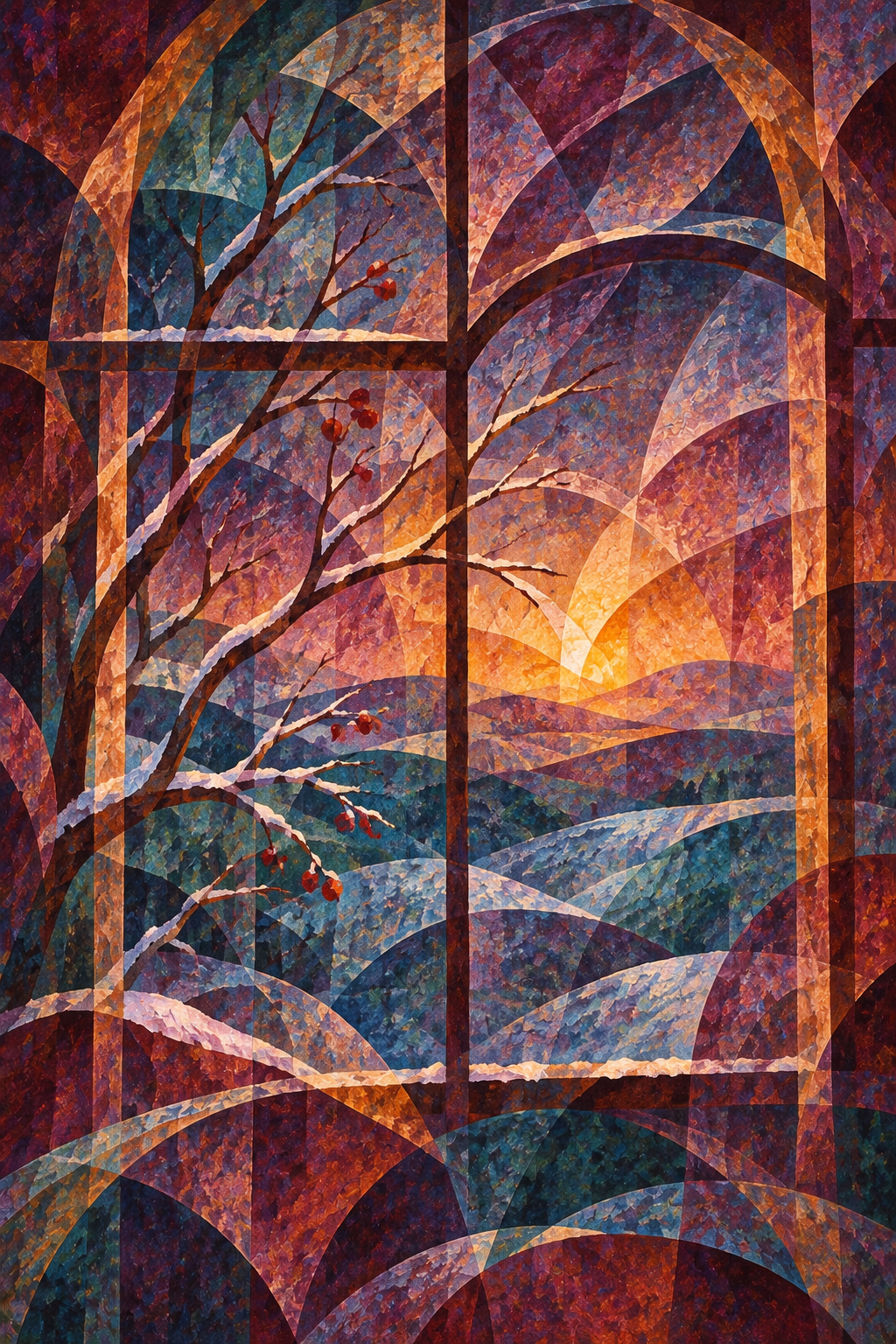
We live in a world that competes for our attention. When we see something beautiful, we may reach for the camera, search for words to describe it, wonder how we can share it with others, or seek to own it. Nothing wrong with these things, but those are different than the experience of receiving or beholding.
To receive beauty is to allow ourselves to be present without possessing, explaining or improving what we encounter. We stop. We look. We perceive and we receive. Gaze with curiosity and tenderness. Attend to what is actually before you, rather than what you expect to see. Receive the moment without turning it into a lesson or an object of possession.
Perhaps you notice sun filtering into a window. Perhaps you hear a bird outside your window. Perhaps you look into the face of someone you have known for years and suddenly you see something you overlooked or something that has changed. Perhaps a moment of sorrow floats to the surface, attend to it. Maybe you observe an act of kindness that brings you to unexpected tears. Stay there. Let yourself be touched. Allow the moment to open you – to tenderness, gratitude, wonder or awe.
This practice is not about finding something beautiful every day. It is about becoming the kind of person who is increasingly available to beauty and awe, whenever it comes.
May the beauty we receive individually become an Advent Revelation of awe we discover together in this Advent journey. Where will beauty find you?
Blessing
Go slowly.
There is holiness you have not yet noticed.
Stay curious.
There is mystery you have not understood.
Draw near.
There are people whose sacredness you have not yet recognized.
Give yourself.
There is beauty the world is waiting to receive through you.
And, when you cannot see the way,
Remember Emmanuel.
God is with us.
In the ordinary.
In the beautiful.
In the broken.
In the waiting.
In the questions.
In one another.
In you and in us.
Behold.
The Holy One is here
and now – become a bearer of awe.
The following poem is entirely AI-generated. It was invited to bring clarity and distillation to the writing above. It is offered humbly in case it might support you in any way.
The Art of Seeing
Before the light appeared,
it was already here.
Hidden in the blue-black silence,
resting in the curve of a leaf,
held in the face of a stranger,
waiting in the ordinary
to be seen.
We have hurried past
the holy all our lives,
searching for something extraordinary,
while heaven kept appearing
in the smallest things.
A candle.
A breath.
A bird taking flight.
The quiet turning of the earth
Beauty does not demand our attention.
It waits.
And when we finally stop,
when we allow our eyes
to soften and receive,
the world becomes transparent.
We begin to see
that nothing is quite as ordinary
as we imagined.
Perhaps awakening is simply this:
to discover that the sacred
has been looking back at us
all along.
Let us see…
Statement of WeCreating Authorship
This article was WeCreated with authoring by Connie Wilson and editing support from Martha O’Hehir and Luke Healy.
All of the wisdom, creativity, and spiritual emergence in ICN comes from the communal field of wisdom and spirit speaking in and through the “We.”
All text in this article is human-authored without the use of AI beyond light editing, according to our AI policy: 1 out of 10
All Images are open-source, used with permission, or created by ICN with the use of AI