

This week, we invite you into several movements of meditative reflections. Each section offers a dynamic of Being born out of our spiritual intimacy. Or perhaps, rather, a way our Being that bears us into spiritual intimacy.
For our becoming invitation this week, we are invited into pathways of deepening intimacy with both one another, and—in the cosmotheandric wholeness of our beloved community—with spirit guides and living nature/material reality.
In moving from Me to We, we are recalibrating from self-referentialism to healthy and effusive mutuality, which means that we relate with one another in ways that are generous, overflowing, and serving so much more than ourselves alone.
To be more precise, we are actually integrating both the I & and We in generative mutuality, as we don’t leave behind our precious personhood and sacred uniqueness. Rather, we bring our deeper, more essential-self-being into relationship and in community. In this way, we find we are not so attached to the old patterns and lesser stories of the self-referential “me.”
Rooted in the ground of trust, with our capacity for connectedness growing more and more, we are able to come into greater, generative, spiritual intimacy amidst beloved community.
As we have moved with the beckoning into holistic trust with “the other,” and taken steps of becoming into trust with ourselves and others, we can come more and more into the ways of being where trust is the ground upon which we walk, the intrinsic pattern underneath, and the woven fabric of our lives in beloved community—our communal being.
This way of being in/as trust can only be inhabited, not simply thought about. It can only be walked, not drawn on a map. It has to be embodied in presence here and now rather than idealized in the abstract. And it only exists in the shared presence of communion.
Deepening trust opens the door to post-tribal community rooted in the field of love. It is from this ground of trust that we can walk together in companionship and entanglement, which is our third quality of divine communion in living community.

Deep community cannot happen without trust. And trust is a tricky thing. How do we choose who to trust? How is trust built? What if we over-trust and innocently subject ourselves to something harmful? What degree of trust is appropriate for relationships in spiritual community?

From the beckoning of our invitation to greater capacity for connectedness, and the loving ways and practices of becoming to grow our hearts in post-tribal ways, we now welcome another core quality of divine communion in living community, our beingin and of the field of love.
The field of love is a place of our most natural being. It is somewhere we go and something that is always around us. It is the ground of our relational being. The heart of our inter-abiding presence in communal being.
And it is here, now.
Come, let’s walk through this field of love together.

One of the foundational qualities of divine communion in our living, evolving, beloved community is being post-tribal. This means that our boundary markers for communal identification are not firm dividers. They are not fixed beliefs. There isn’t the need for strenuous gatekeeping and fortified barriers.
When we put walls around our beliefs or our communities, we put walls around our hearts.
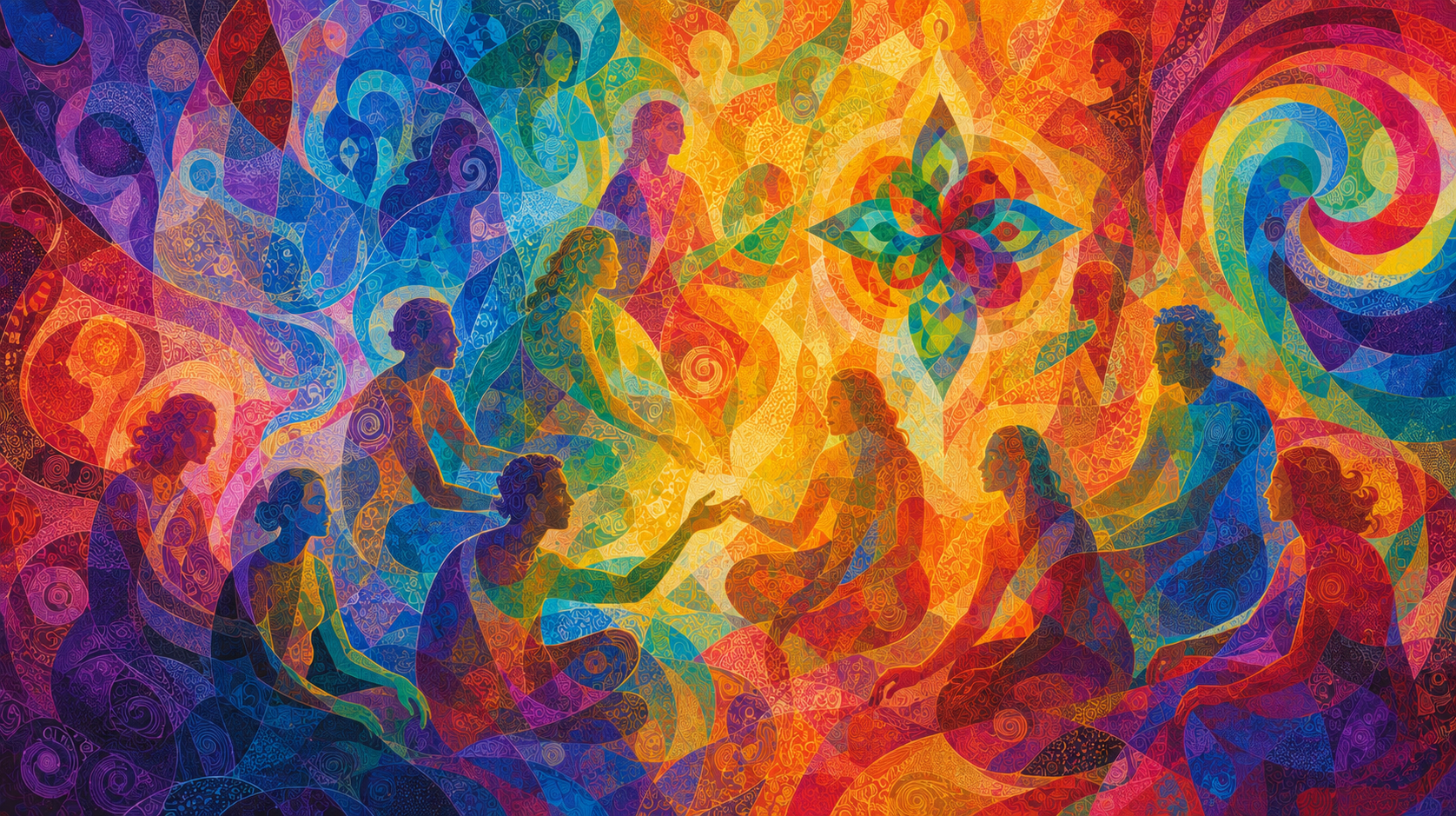
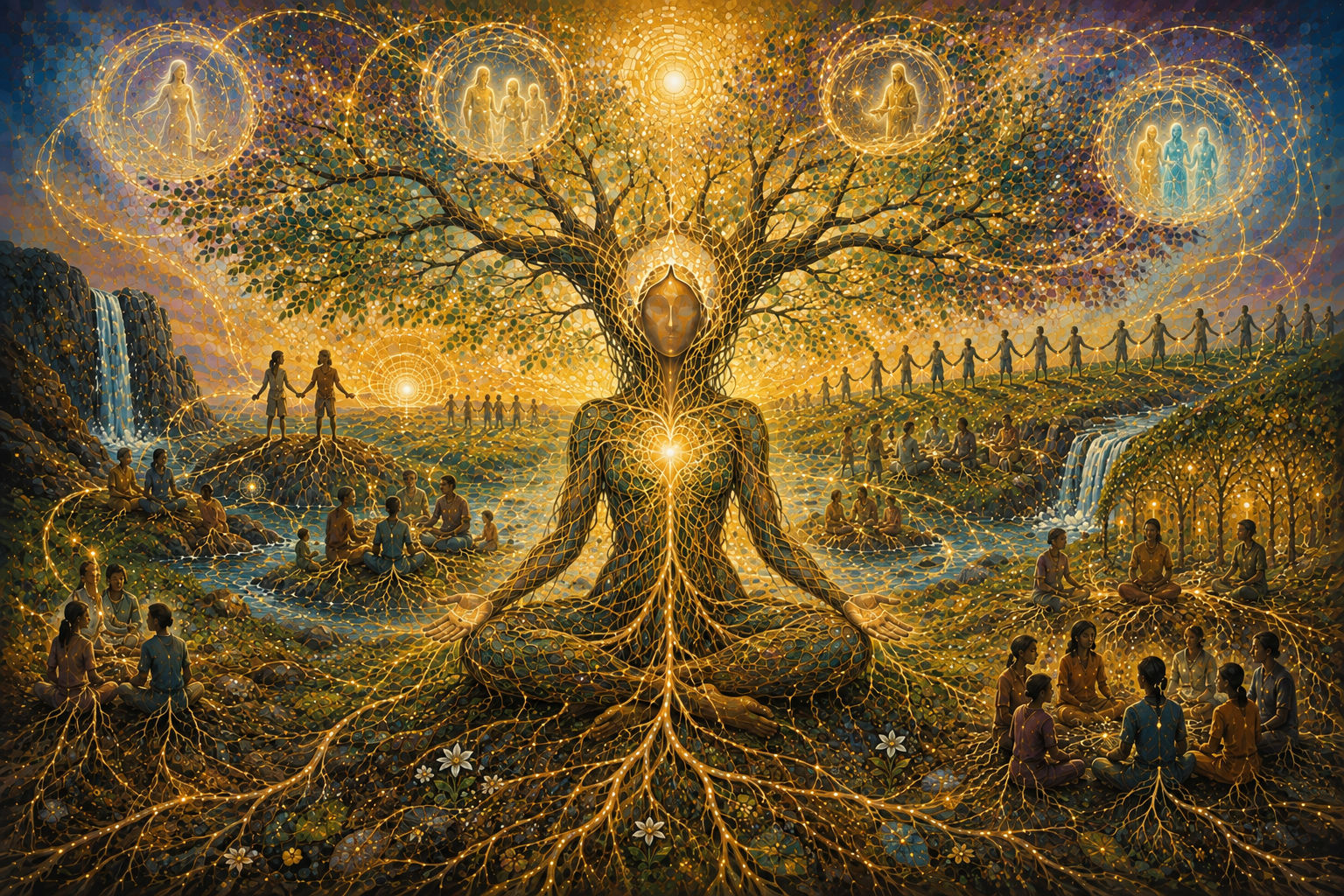
In welcoming directly and intentionally the divine reality of our beloved community, we have in-corporated—unified-in-body—our communion with all people, with spirit guides and ancestors in non-physical form, and now with the whole of nature, the earth, and the cosmos.
Our being is communal. And the roots of our communion run deep.
Now, in our deep being, we re-member our shared nature as nature.
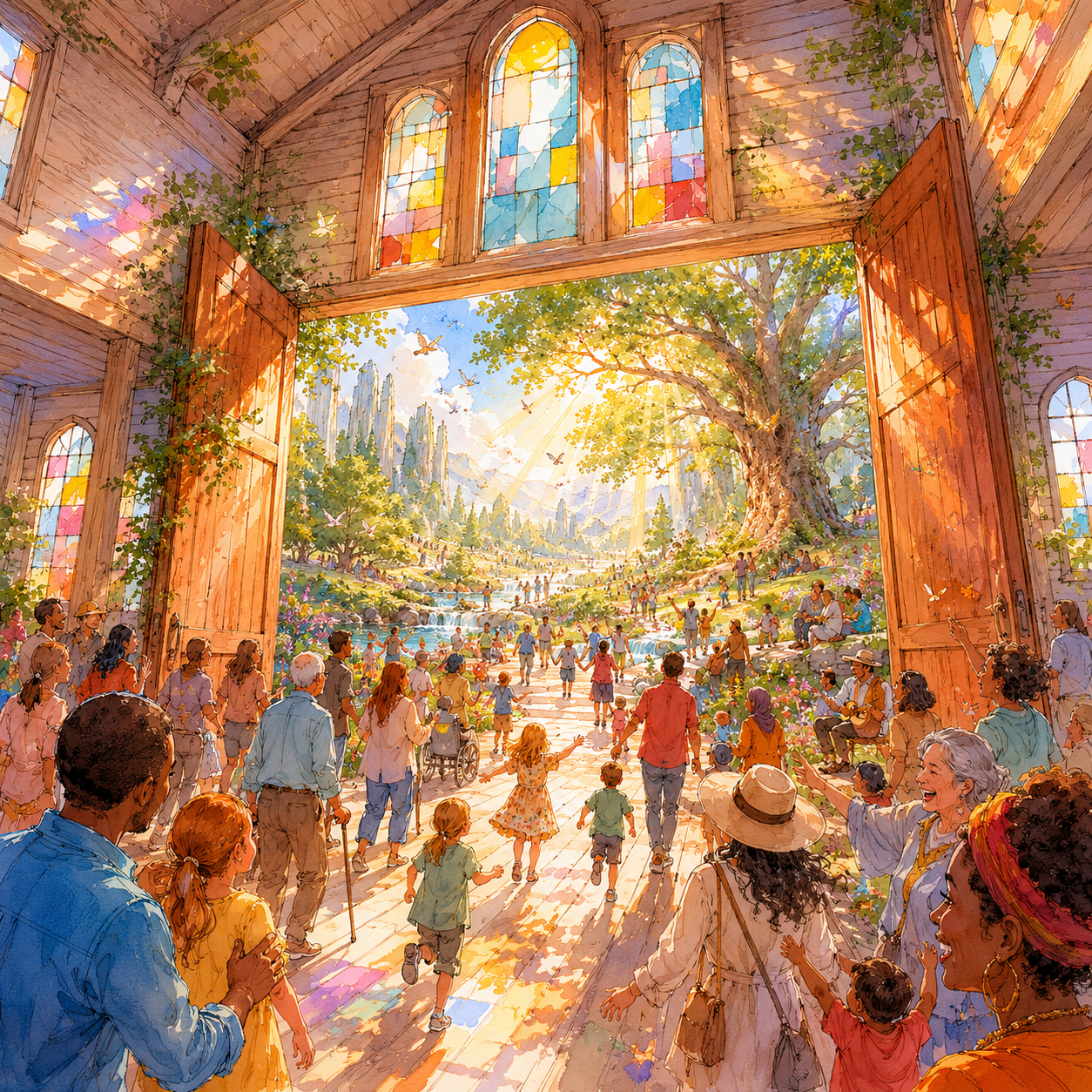
Sabbath is an invitation to enter a portal of timelessness, of the eternal now. We “set apart” time to stop and remove ourselves from the hectic busy-ness and noise of modern civilization. Our intention is to allow the Presence of Christ in Creation to speak in the silence. It is to rest in the arms of our Mother, upon the earth. It is to witness the ever present but unnoticed interconnectedness of the True Beloved Community which includes all that is, and perhaps to become consciousness of our oneness with all, in the Body of God. Oneness with the elements, the grasses and trees, the animals, birds, fish, and insects, the plants and lichen and fungi… Oneness with people of colors and genders, with the indigenous ones who have long mastered the ways to live with the rhythms and regions of earth.

In welcoming the divine reality of our Beloved Community, we have consciously included the non-material presence of spirit guides in our midst over the last weeks in part three. Now, we turn to specifically and truly integrate the substance of material reality as a vital and fundamental dynamic of our living community, our divine communion.

In this rhythm of evolution, we continue to welcome and move more into the lived reality and experience of how our being is communal.
And this great communion of saints is made up of living persons with whom we can relate, commune, and WeCreate together—for we are of one body in our true being, walking the ever-evolving path of transformation, healing, restoration, and love.

This week, we invite you to explore how you might engage with spirit guides in a new way. If you already have experience and relationships with guides in your life, you might be drawn to open to a new presence, deepen your current relationships, or renew your commitment to engaging with them regularly.
If engaging with spirit guides is new for you, are you open to welcoming one today?
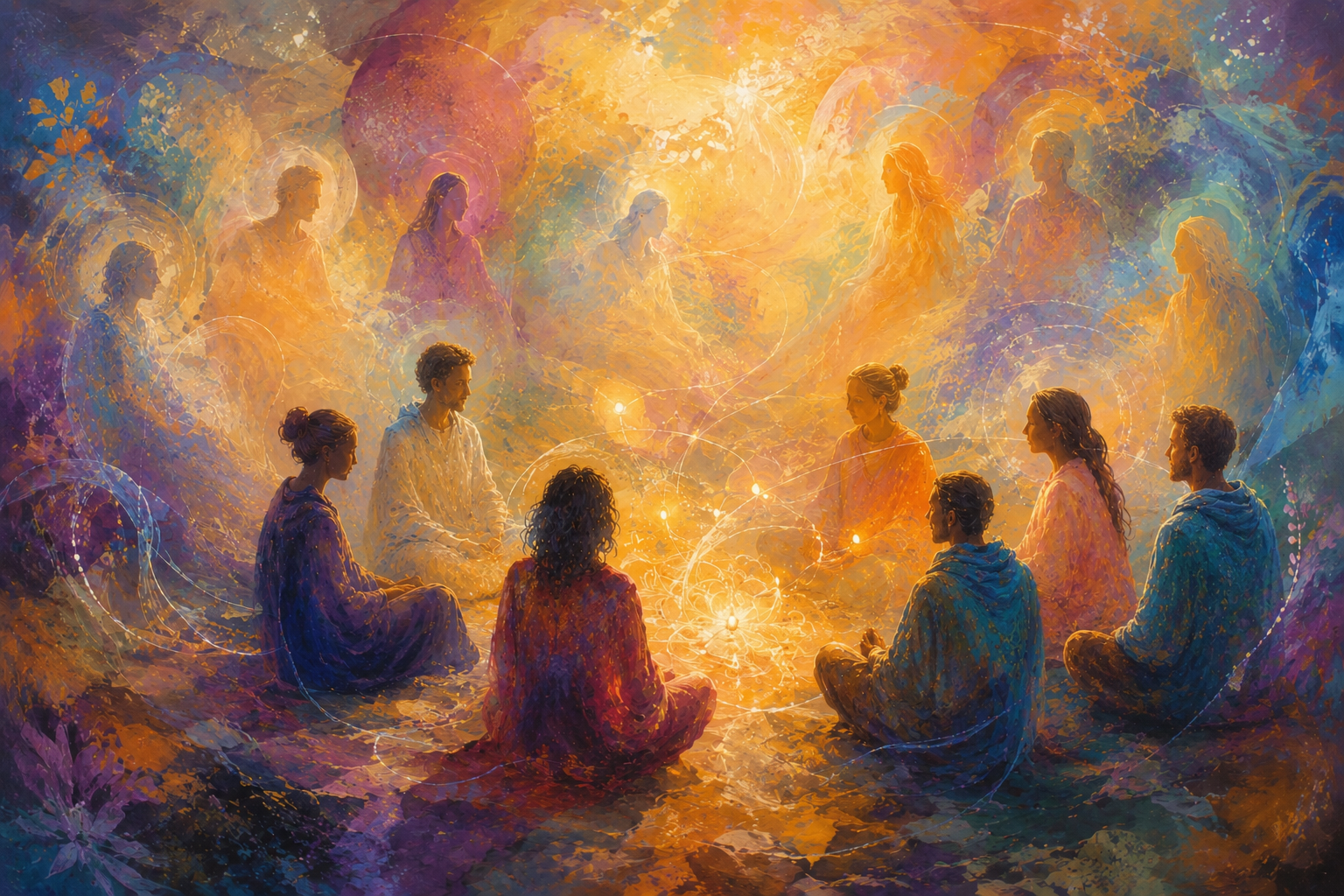
Our beloved community is not confined solely to the human realm. A fundamental starting point for our way of community is to consciously and intentionally welcome divine reality. And while we engage in the ways of bringing forth the divine in and through one another, we also welcome the ways we encounter the divine in spirit form, in the presence of guides

In “practicing” community, we are engaging in the very work of evolution itself—which is to inhabit love in living relationship, to grow in our capacity to embody love, and to deepen in our being, which is communal.
From our beckoning to practice community and the evolutionary becoming that occurs through the great force of love–amorization–we now come to our rhythm of being.

There are many ways that we practice community, some of which we will explore throughout this series on Beloved Community. For our Becoming offering this week, rather than any one specific practice, we will set forth a new overarching and undergirding “container” which is both the source and the structure of all our spiritual and evolutionary becomings.
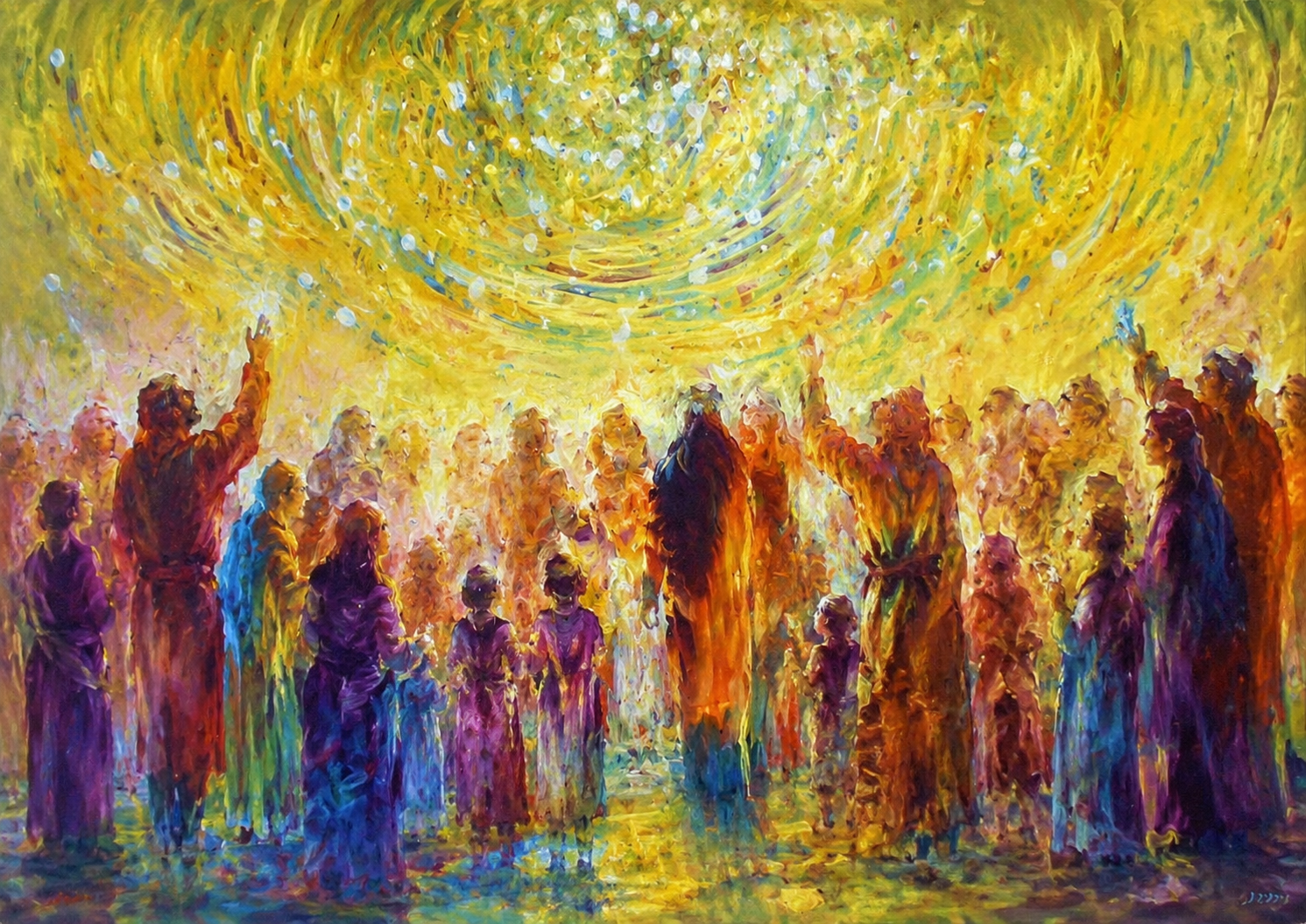
Community is not just something that happens alongside our personal spiritual pursuits, but is the vital and necessary calling—especially in this time—of coming into our “unity together.” Of participating in the interbeing among us to actively and necessarily realize that our divine nature is collective. That we must come into this deeper way of mutuality not only to evolve further in our consciousness, but perhaps even essentially for our survival as a species.

As we continue to release our self-referentialism and separateness, we have been embracing several qualities of divine communion offered in our Becoming invitation last week.
And now, how might we inhabit these communal ways of being even more?
In support of our daily, any-and-every-moment inhabiting of our communal being, we offer a simple process you might take up this week.
Each morning and each evening, you can be with each of these qualities, holding the intention and recognition of your/our living inhabitation in divine communion. You may want to choose one quality for the day, or all of them each day.
The phrasing offered below is suggestive. You are welcome to craft your own language, choosing how you want to attune and engage with your pathways of inhabiting.
If you made a commitment last week, you could consider how you might interweave that into this daily process.

Every healthy community needs compelling gathering energies and generative value. Community in and of itself, for itself, is not enough. In living community, the ties that bind/bond us are not solely the mental agreements and commonalities of individual preference, but the experiential qualities that mark the field among us each time we gather. These are the deeper lived values and ways of being together that have a collective life and can be felt when we enter the field—which is not bound to particular individuals, leaders or abstract ideals.
Here are some of those qualities commonly experienced in our community gatherings and groups.

In this writing, and those to follow in the weeks ahead, we will immerse ourselves in this divine communion through focusing on “Beloved Community,” which is one of the fundamental living lineages of ICN. We’ll revisit some of the core, foundational writings on this topic from years past, particularly how we “practice community” together—our ways of engaging in processes and practices together to deepen, inhabit, and be divine communion among us.
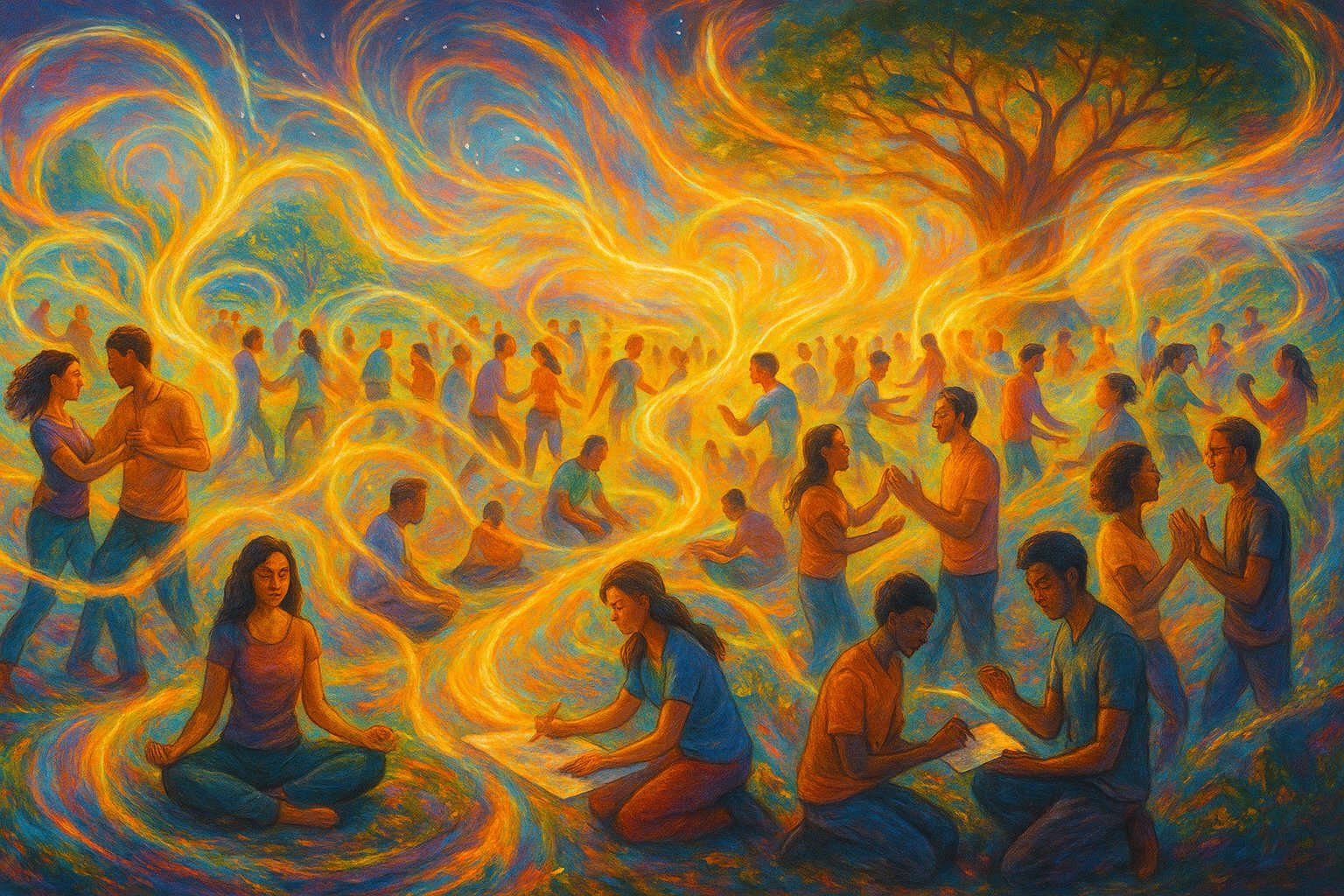
During Eastertide, we will reflect on the resurrection of Jesus for insight into how we might live into our resurrections (renewals) more fully.

A great relief washes over us;
the weight on our shoulders lifts;
a surge of energy and purpose lifts our spirit.
We envision a better way forward.

During Eastertide, we will reflect on the resurrection of Jesus for insight into how we might live into our resurrections (renewals) more fully.

Eastertide is the 50-day period in the Christian calendar that starts with Easter and concludes with the beginning of Pentecost. It is believed that “Easter” is connected to the Proto-Germanic word austron, which means “dawn” and reflects themes of rebirth and renewal associated with springtime.
So, during Eastertide, we will reflect on the resurrection of Jesus for insight into how we might live into our resurrections (renewals) more fully.
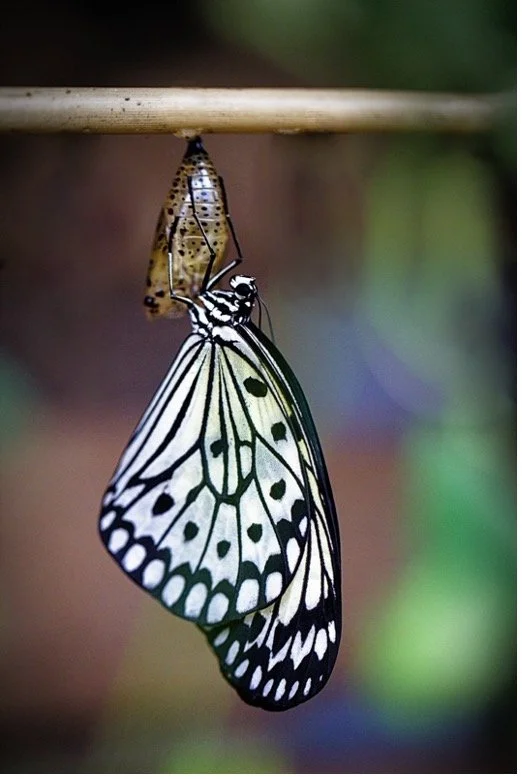
Eastertide is the 50-day period in the Christian calendar that starts with Easter and concludes with the beginning of Pentecost. It is believed that “Easter” is connected to the Proto-Germanic word austron, which means “dawn” and reflects themes of rebirth and renewal associated with springtime.
So, during Eastertide, we will reflect on the resurrection of Jesus for insight into how we might live into our resurrections (renewals) more fully.
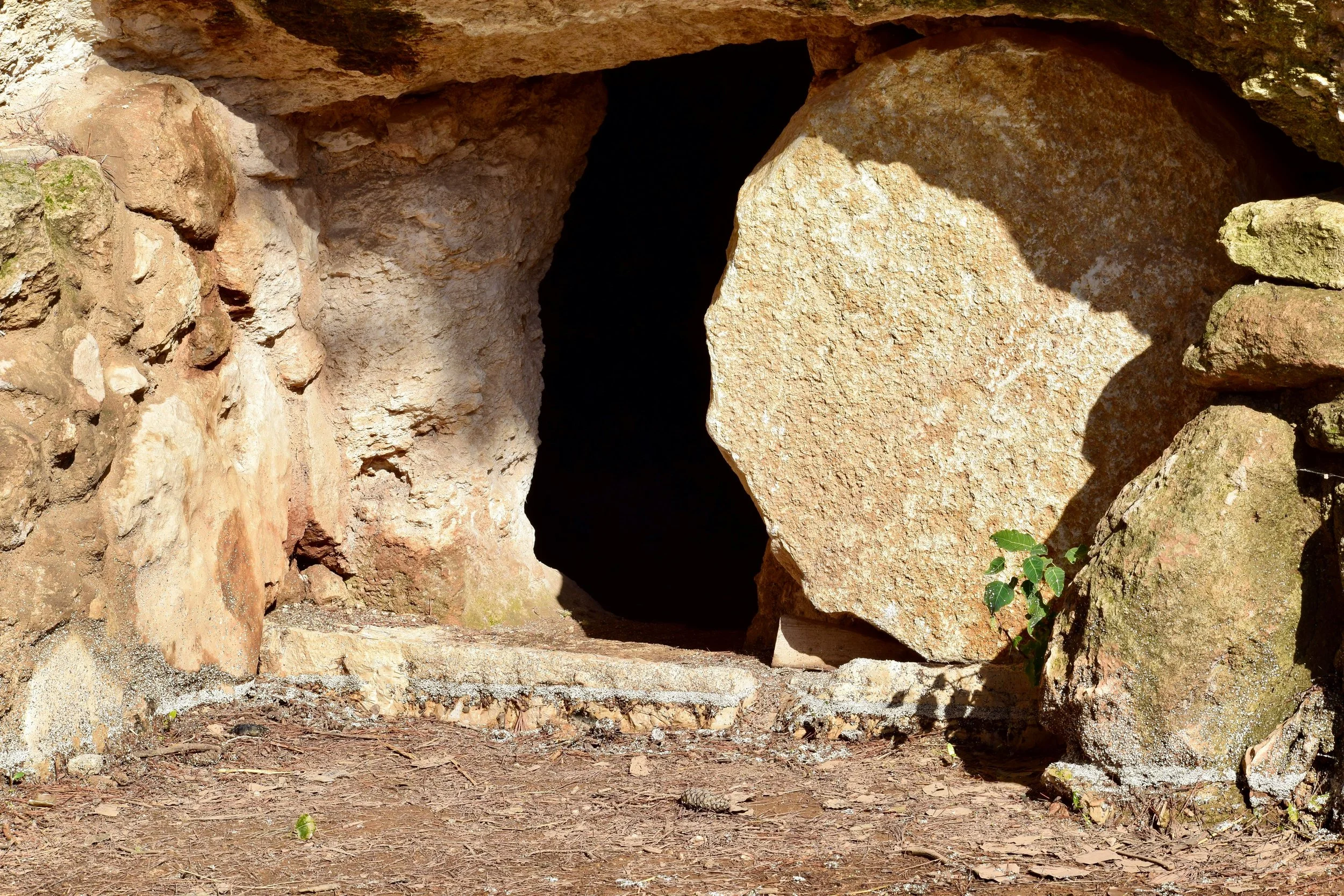
“Jesus is Risen! He is Risen Indeed!”
Really?
For many persons, their answer to that sincere question determines whether they consider themselves “Christian” or not. Either we believe that the resurrection of Jesus from the dead was historical fact or it is superstitious fiction. Or perhaps we simply do not care one way or another.
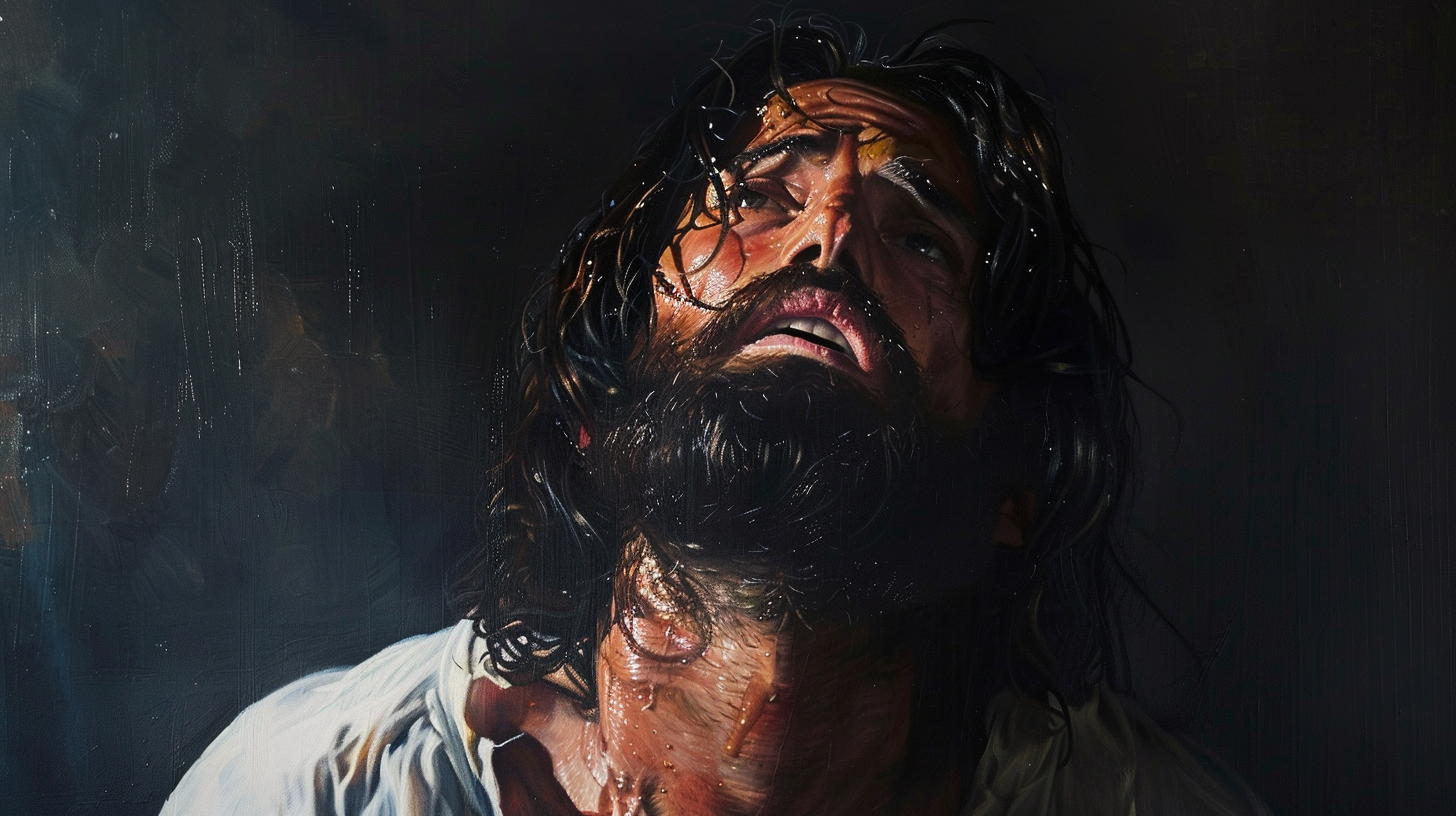
“It is finished.”
Uttering his last words, perhaps barely a whisper, Jesus released his last breath and died.
His struggle subsided; pain ceased; consciousness extinguished.
Jesus was dead.
He was taken down from the cross, and his body was hurriedly and quickly entombed before the beginning of Sabbath. Jesus felt nothing, thought nothing, was no-thing.
Holy Saturday follows the crucifixion of Good Friday, just as the existential torpor of death follows the bodily struggle of dying.
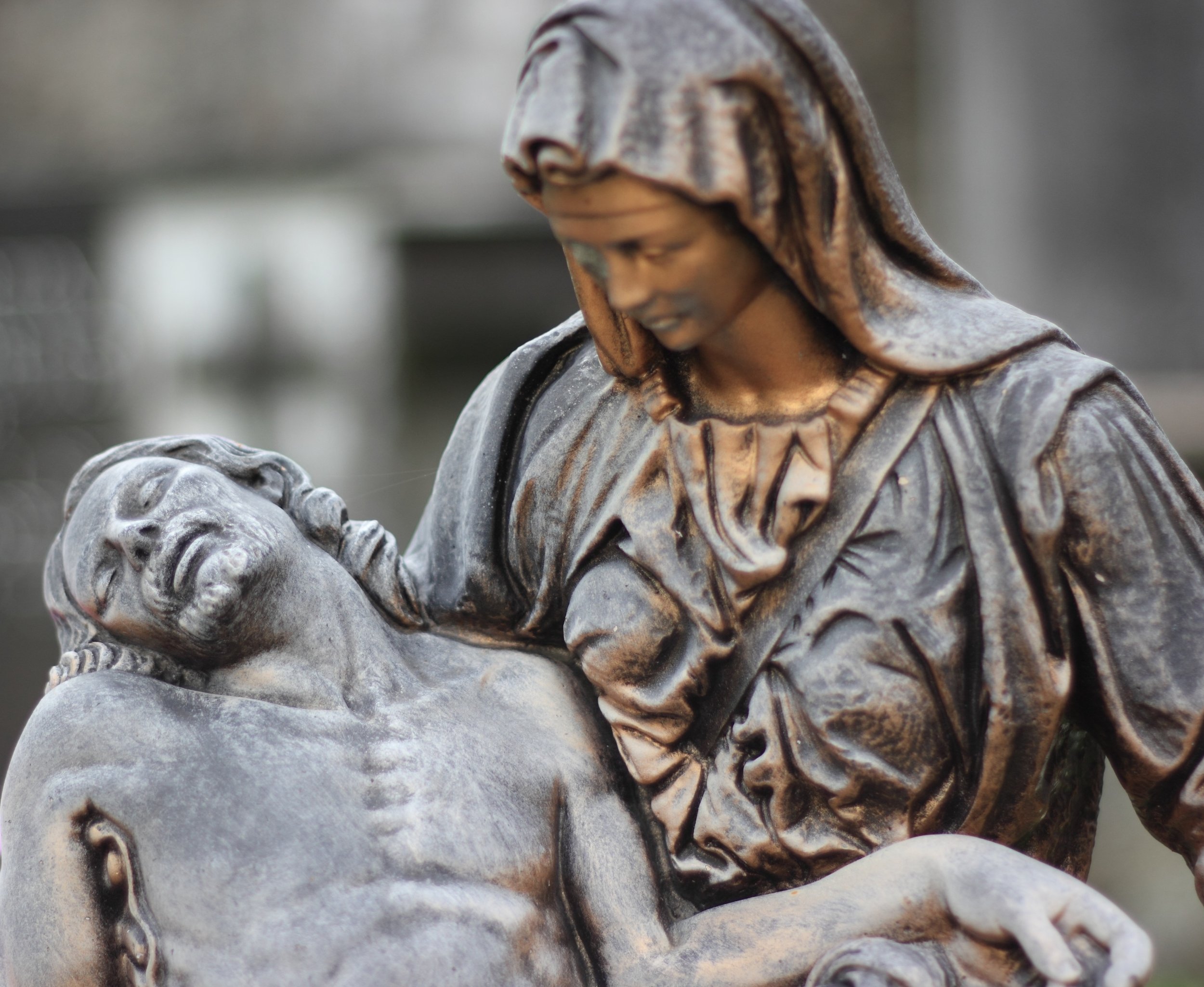
As the most solemn day in the Christian year, Good Friday commemorates the unjust trial and horrific crucifixion of Jesus.
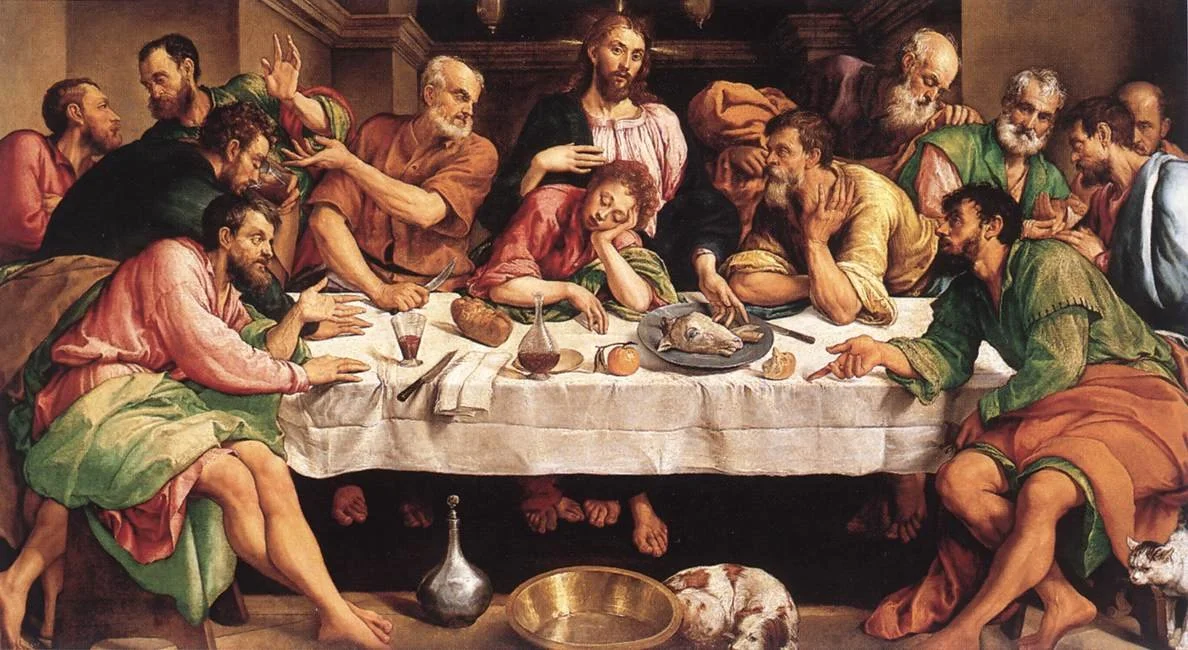
Maundy Thursday is primarily known for the “Last Supper”, when Jesus celebrated his last Passover with the disciples. In the years that followed, this commonplace act of sharing a meal developed into the most defining ritual in Christianity, known also as the Eucharist and Communion.
This week, we invite you into several movements of meditative reflections. Each section offers a dynamic of Being born out of our spiritual intimacy. Or perhaps, rather, a way our Being that bears us into spiritual intimacy.