
Deaths, Entombments, and Resurrections
Embodying Resurrection
In Eastertide
(50-day period from Easter to Pentecost)
During this Eastertide, Beth Biery and Robert Martin will continue WeCreating the offerings each Saturday, which will include two parts:
Beckoning: a reflection on the topic of resurrection in our lives.
Being: a meditation and questions for reflection (examen) that may serve us as a daily devotional practice, to help us dwell deeper in the Divine Story, let go of lesser stories, and live out our mystical vocation in the moment-to-moment as well as in momentous ways.
A new midweek email is coming out, called “Community Connection” with two main sections:
“Becomings of the Christophany Choir” in which community members share stories of living into their resurrections.
Opportunities for Community participation and contribution.
If you haven’t yet read the reflection on Easter Sunday, we invite you to do so. It sets the stage for our subsequent reflections in Eastertide. Its main theme was articulated by pan-Christian theologian Raimon Panikkar:
resurrection is not limited to [Jesus] alone,
it is the vocation of all of us….
Resurrection is ours, it is now.
During Eastertide, we will reflect on the resurrection of Jesus for insight into how we might live into our resurrections (renewals) more fully.
Deaths, Entombments, and Resurrections
April 25, 2026
4th Sunday of Eastertide
John 20
19 On the evening of that first day of the week, when the disciples were together, with the doors locked for fear of the Jewish leaders, Jesus came and stood among them and said, “Peace be with you!”
When expounding on this passage in John, biblical commentators typically focus on the more magical, supernatural way that Jesus somehow got past locked doors and appeared to the disciples. That’s perfectly understandable, but I am drawn to another way of looking at the passage. I believe it speaks profoundly about the interim period in the spiritual life between the process of dying and being raised in new life.
The disciples locked themselves in that room to escape persecution by Jewish leaders. I imagine they tried to be quiet and still to avoid detection.
In that dark stillness, their world died. They had just endured the unimaginable horror of Jesus’ crucifixion. They were falling apart with grief and despair. Everything they believed to be true and right was dissolving. Their spiritual path had led nowhere. They were pariahs in their tradition. A dying and death of many sorts.
Just as Jesus’ life passed away and his body was laid in a dark tomb, this community of disciples had entombed themselves. Dark, stillness. Nothing but death within.
But even in the midst of their despair, when all seemed lost and destroyed, the disciples still lived and moved and had their being within the Divine Story.
LIkewise, no matter what has died in our lives, nothing in life or in the tomb separates us from the Divine Life. For even in our tombs,
when all seems lost,
the Spirit… breathes… us.
Tombs of transformation.
In the dark stillness of that locked room, without the disciples’ knowledge or effort, their Divine DNA was quietly, gradually, effortlessly at work. That Truth was vividly manifest as the disciples became aware of Jesus in their midst, a Divine Word and Presence of Peace.
In that dark stillness, the Divine Life was reprogramming every ‘cell’ in their corporate body to share all things, to sing and praise, to lift each other up, as unto Christ.
A transformation of individuals into One Body,
of a community into a more Divine Communion.
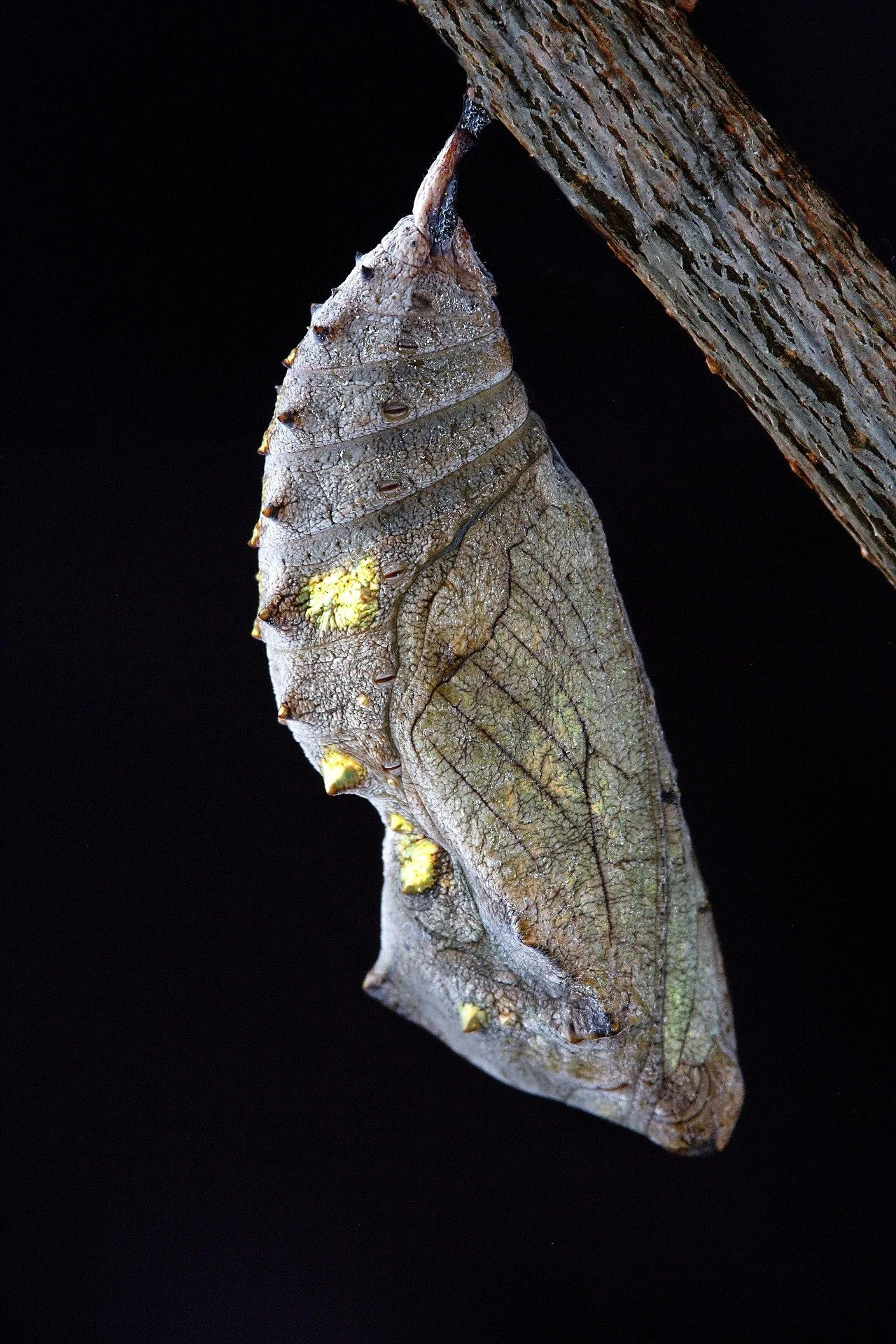
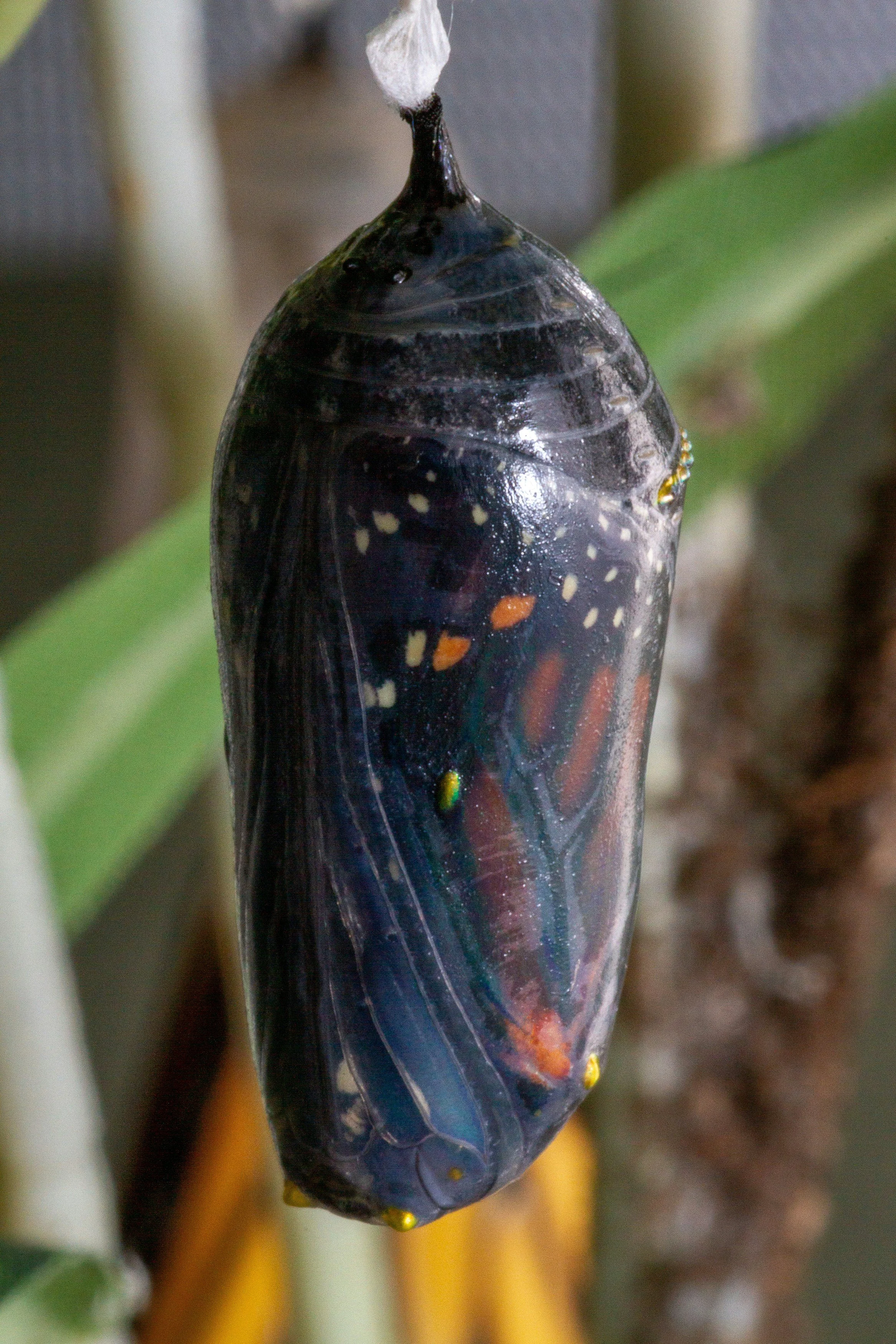
During an ICN WeEvolve not long ago, we were reflecting on the Easter movement from death to resurrection. The comparison with the transition from caterpillar to butterfly came up, and one of the participants, Lorilyn Wiering, described in fascinating detail the amazing process within the chrysalis of how the body of the caterpillar dissolves into goo. That is, the bodily structure of the caterpillar breaks down so that its DNA can reprogram its seemingly chaotic cells into a completely different structure with wings and legs as well as the instinctual understanding that it should do something it has never done before: it should fly! And cover great distances!
Throughout Lent and Holy Week, we considered how, on the spiritual journey, we undergo many death-like experiences and many types of renewals and resurrections. Rarely though do we attend and ponder what happens in our tombs – in our chrysalises – in the interim space after death and before resurrection, that dark stillness in which what has died passes away and is no more.
In that dark stillness, that mystical chrysalisness, that our spiritual DNA re-forms us according to a radically different Logic (Logos!). A new order and new structure emerges, a newness we could not have anticipated. A new self-understanding and new sense of vocation rises in our womb, excites our hearts, and sparks our imaginations.
Within the spiritual chrysalis, we are transformed more fully into the imago Dei.
For in the dark stillness,
when we are powerless,
when we can’t remake ourselves,
when we “are no more”,
a Power infinitely beyond us and intimately within us
quietly, effortlessly, graciously restructures us
to more perfectly (but never completely) reflect and radiate the Divine Life.
How have you experienced mystical chrysalisness?
The passage from death to new life is always through a tomb,
a quiet stillness of active inactivity,
of effortless effort,
of ego-less agency…
a chrysalis of mind-less attentiveness,
of patient anticipation in which we wait for that which we know not.
In the spiritual journey, the passage in and through the tomb is something we can and should practice. We can be intentional. We don’t have to wait until an untimely and unwanted ‘death’. It is available every day, every moment.
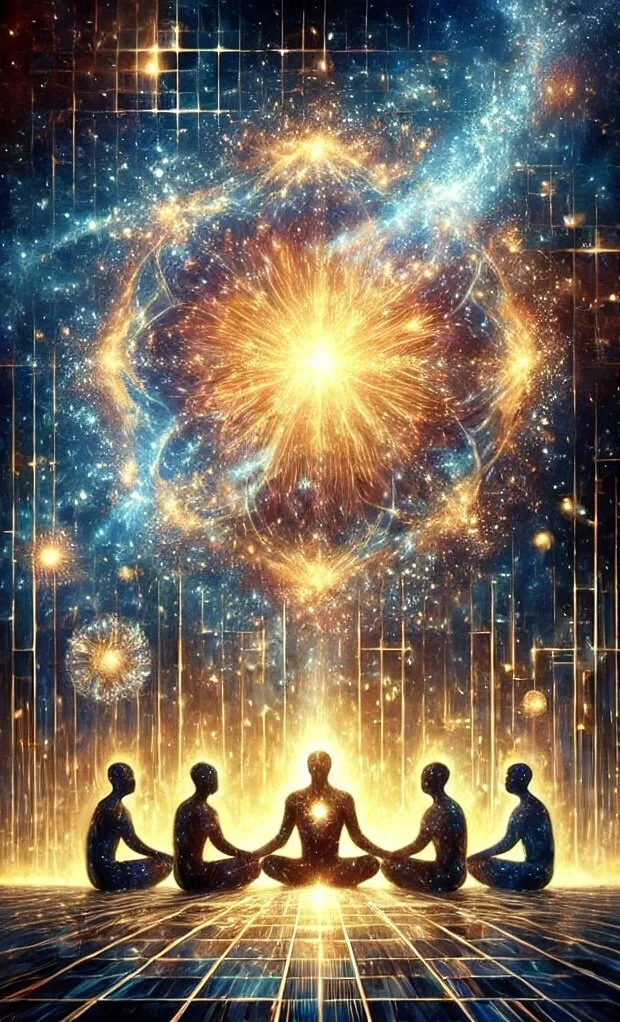
A moment-to-moment opportunity to allow our chrysalis to work its magic in us is called meditation. Meditation is a purposeful and gentle discipline of creating a chrysalis of stillness and quietude in which we open ourselves to being Divinely restructured, reconstituted, resurrected. Here. Now.
Dwelling in Our Resurrected Being
Living on the Other Side of the Stone
Eastertide Examen and Meditation
To help us settle into and naturalize our resurrections, we offer a short examen reflection and a recorded guided meditation. We hope that the practice of reflection and meditation will be a daily discipline for you, for it is only through regular repetition that we are spiritually formed by our resurrections. Otherwise, if only episodic, resurrection power fades and we revert to default patterns.
We live out our resurrections through consistent, regular practice.
We invite you to enter into these meditation exercises as regularly as you are able. The questions are modeled after the Ignatian examen. Take a couple minutes to ponder and write your reflections on these questions in a journal or tablet. No need to over-think; all reflections are welcome.
Examen Questions:
How am I responding to darkness and unknowing?
What carried me through locked doors today?
How is new life changing me?
When ready, start the recorded meditation.

Consider incorporating the Examen and Meditation in your WeSpace groups.

Statement of WeCreating Authorship
This article was WeCreated with authoring by Robert Martin and and light editing by Beth Biery.
All of the wisdom, creativity, and spiritual emergence in ICN comes from the communal field of wisdom and spirit speaking in and through the “We.”
All text in this article is human-authored without the use of AI, according to our AI policy: 0 out of 10
All Images are open-source, used with permission, or created by ICN with the use of AI