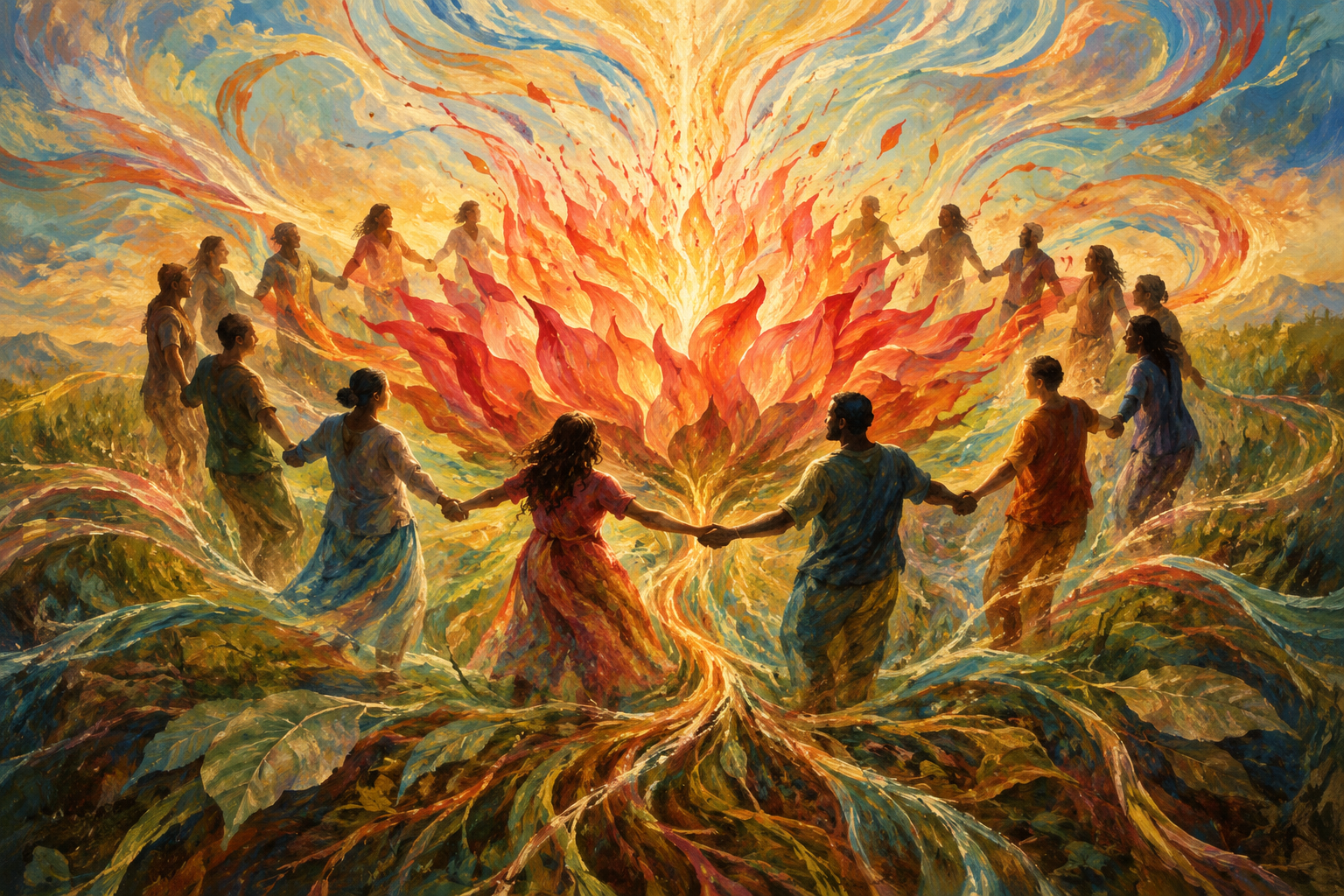

In this writing, and those to follow in the weeks ahead, we will immerse ourselves in this divine communion through focusing on “Beloved Community,” which is one of the fundamental living lineages of ICN. We’ll revisit some of the core, foundational writings on this topic from years past, particularly how we “practice community” together—our ways of engaging in processes and practices together to deepen, inhabit, and be divine communion among us.
Read MoreDuring Eastertide, we will reflect on the resurrection of Jesus for insight into how we might live into our resurrections (renewals) more fully.
Read MoreA great relief washes over us;
the weight on our shoulders lifts;
a surge of energy and purpose lifts our spirit.
We envision a better way forward.
Read MoreDuring Eastertide, we will reflect on the resurrection of Jesus for insight into how we might live into our resurrections (renewals) more fully.
Read MoreEastertide is the 50-day period in the Christian calendar that starts with Easter and concludes with the beginning of Pentecost. It is believed that “Easter” is connected to the Proto-Germanic word austron, which means “dawn” and reflects themes of rebirth and renewal associated with springtime.
So, during Eastertide, we will reflect on the resurrection of Jesus for insight into how we might live into our resurrections (renewals) more fully.
Eastertide is the 50-day period in the Christian calendar that starts with Easter and concludes with the beginning of Pentecost. It is believed that “Easter” is connected to the Proto-Germanic word austron, which means “dawn” and reflects themes of rebirth and renewal associated with springtime.
So, during Eastertide, we will reflect on the resurrection of Jesus for insight into how we might live into our resurrections (renewals) more fully.
“Jesus is Risen! He is Risen Indeed!”
Really?
For many persons, their answer to that sincere question determines whether they consider themselves “Christian” or not. Either we believe that the resurrection of Jesus from the dead was historical fact or it is superstitious fiction. Or perhaps we simply do not care one way or another.
Read More“It is finished.”
Uttering his last words, perhaps barely a whisper, Jesus released his last breath and died.
His struggle subsided; pain ceased; consciousness extinguished.
Jesus was dead.
He was taken down from the cross, and his body was hurriedly and quickly entombed before the beginning of Sabbath. Jesus felt nothing, thought nothing, was no-thing.
Holy Saturday follows the crucifixion of Good Friday, just as the existential torpor of death follows the bodily struggle of dying.
Read MoreAs the most solemn day in the Christian year, Good Friday commemorates the unjust trial and horrific crucifixion of Jesus.
Read MoreMaundy Thursday is primarily known for the “Last Supper”, when Jesus celebrated his last Passover with the disciples. In the years that followed, this commonplace act of sharing a meal developed into the most defining ritual in Christianity, known also as the Eucharist and Communion.
Read More