
Holy Saturday with Our Divine Story
“It is finished.”
Uttering his last words, perhaps barely a whisper, Jesus released his last breath and died.
His struggle subsided; pain ceased; consciousness extinguished.
Jesus was dead.
He was taken down from the cross, and his body was hurriedly and quickly entombed before the beginning of Sabbath. Jesus felt nothing, thought nothing, was no-thing.
Holy Saturday follows the crucifixion of Good Friday, just as the existential torpor of death follows the bodily struggle of dying.
Liturgically, most of Christianity skips right over Holy Saturday without giving it much thought. It seems that nothing happens in the tomb: it’s quiet, dark, cold, lifeless. It’s not anything we care to dwell on: “Let’s hurry on up to Easter, sunrise services, and our favorite hymns.”
Yet,
for anyone who has had a loved one die,
for those who feel way too close to their own mortal end,
wonderings about the end of one’s existence cannot be so easily denied.
And yet again,
for those who feel lifeless right now,
for those whose existence seems meaningless,
the sense of entombment, of inertia, of deep depression, of faithlessness may weigh heavily upon them.
When have you felt entombed… alone… hopeless… lifeless…?
Typically, we want to forget our mortality, to distract ourselves from memories of emptiness and lack, from our eventual no-thing-ness. But one of the great gifts of liturgical seasons is that we can dwell within one season with all the seasons in mind. From year to year, seasons flow into and out of each other. Every season has a beginning, an ending… and a new beginning. In this way, the liturgical cycle softens the impact of Holy Saturday and its message of all the little deaths we experience up to the final, ultimate end of our material existence.
We know how Jesus’ story ends…and begins again. We can take comfort in that perspective. Tomorrow, our Easter reflection will look back to the tomb from the other side of the rolled-away stone.
But for “today”, let’s stay in the tomb for a little while. In the safety of our imaginations, in the communion of the ICN community, and always, always securely held in the Divine Life, let’s gently sense our way into our deaths, when we were empty, without ability, without power, without faith… alone… quiet.
For the more we realize and appreciate the preciousness of our mortality, the more we will appreciate that the power by which we stand in resurrection light is not our own. It is a gracious gift that we are unable even to accept. It just is.
In our weakness, the glory of the Divine Life shines forth, resurrecting the lifeless.
Holy Week Examen and Meditation
To accompany our journey of Passion this Holy Week, you are encouraged to practice this reflective and meditative discipline regularly. The questions are modeled after the Ignatian examen, and are oriented toward an evening setting. Take a couple minutes to ponder and write your reflections on these questions in a journal or tablet. No need to over-think; all reflections are welcome. Then when ready, start the recorded meditation.
What lesser story did I experience today?
How did I experience being centered and grounded in God today?
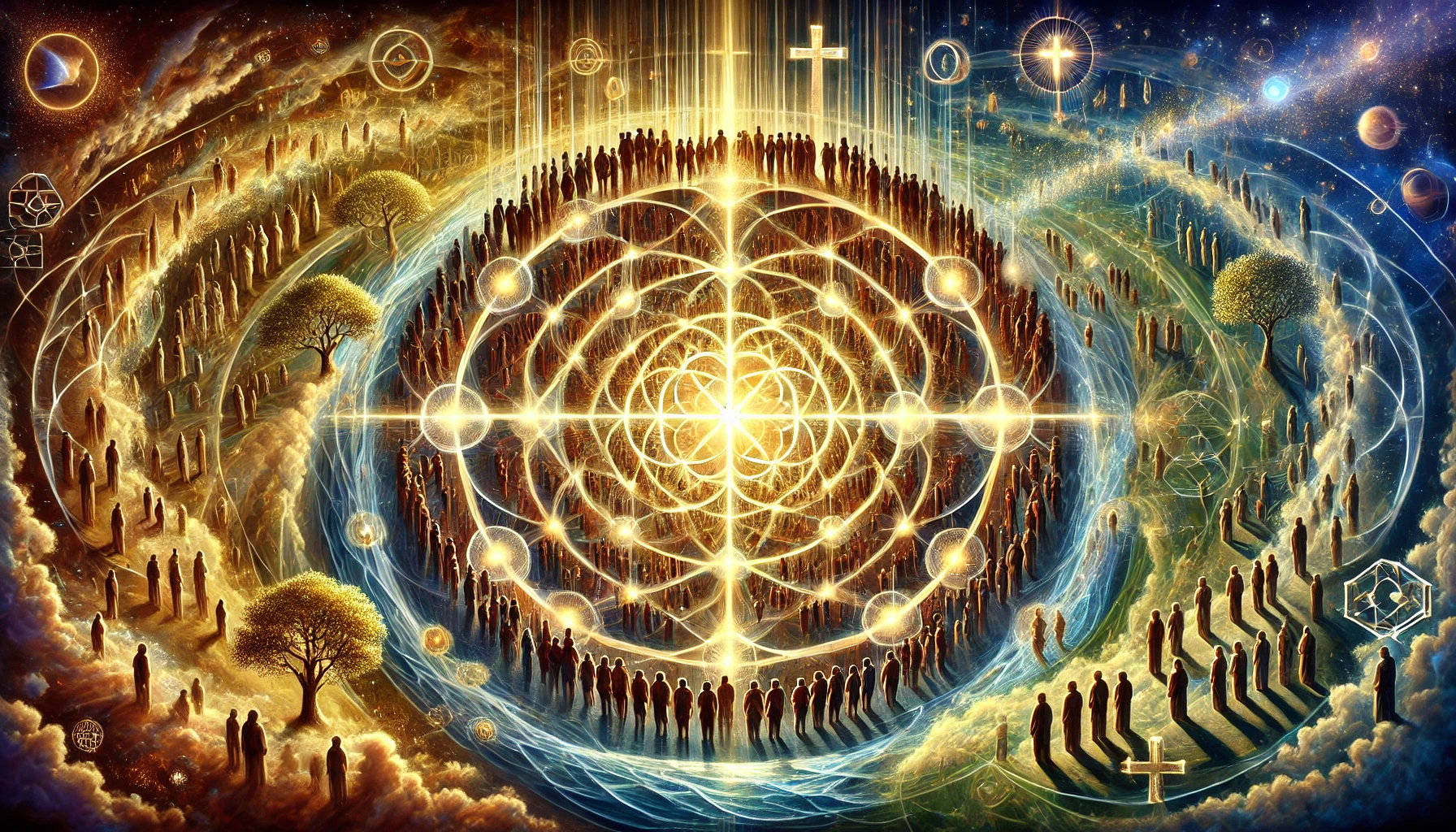
This is the Christ Logos, the universal pattern of God’s creativity still coming into being, every and always.
And it is our divine WeCreating invitation.
To sing the song of love in the world, composed from nothing less than the Living Origin of eternal wholeness and union in God.
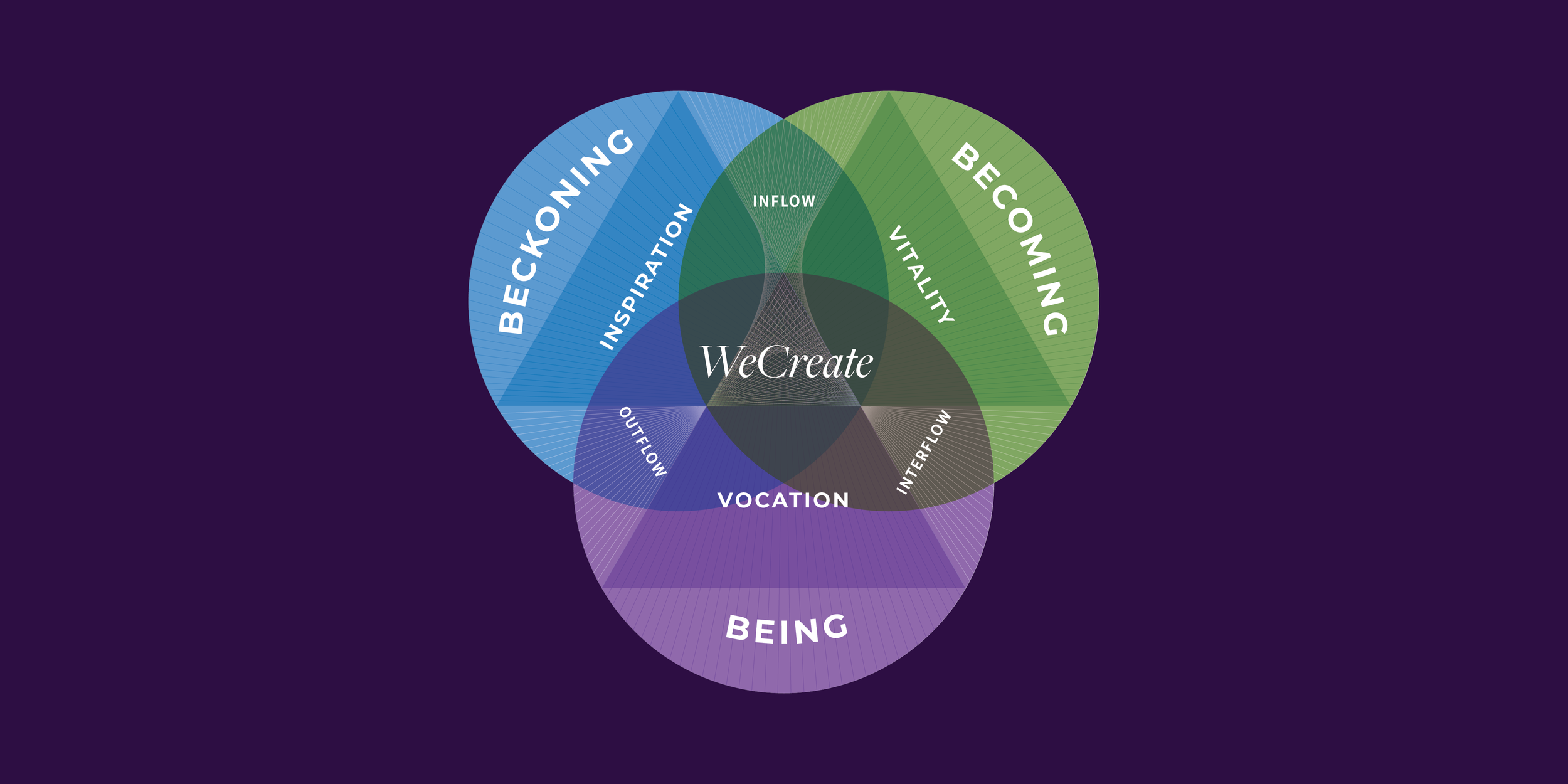
Statement of WeCreating Authorship
This article was WeCreated with authoring by Robert Martin, with editing support by Beth Biery and Luke Healy.
All of the wisdom, creativity, and spiritual emergence in ICN comes from the communal field of wisdom and spirit speaking in and through the “We.”
All text in this article is human-authored without the use of AI, according to our AI policy: 0 out of 10
All Images are open-source, used with permission, or created by ICN with the use of AI