
Marks of Resurrection

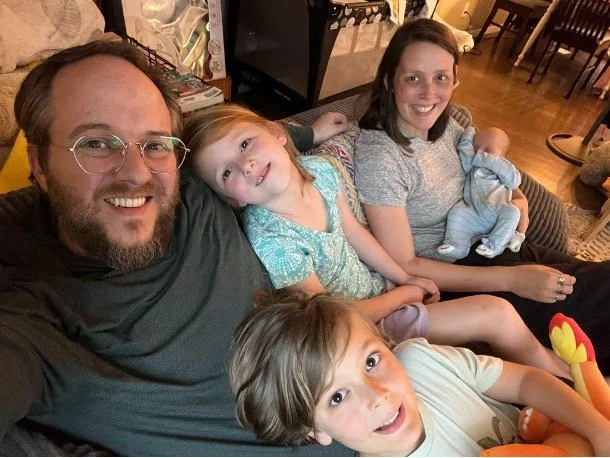
Welcoming Linden Aster to the Luke Healy Family
Dear ICN,
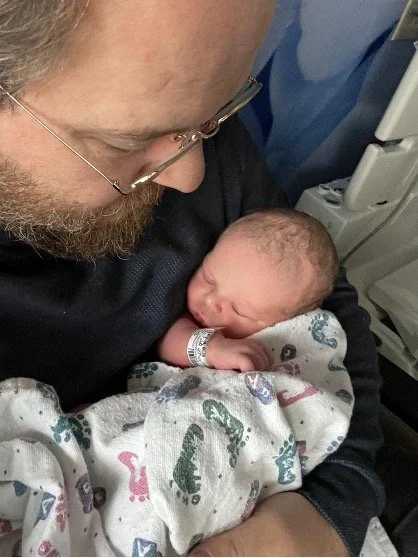
With great joy we welcome little Linden to the Healy family. He was born April 13, and he and his mother, Heather, are in good health. Luke reports that he is sleeping well for a newborn, and the whole family is getting used to a very different schedule organized around Linden.
Luke is on paternity leave from his responsibilities with ICN. He will start slowly taking on tasks for the ICN community starting around May 18 and return to full-time work in mid-June. Until then, our administrative assistant, Gee, and several ICN members are tending to the daily needs of our community.
A word from Luke to ICN:
I’m so blessed to be immersed in these precious weeks with Linden and family, attending and attuning to his needs and supporting Heather in a way I’ve never been able to do before, after birth. It’s meant so much to us both and we are so grateful! Linden is doing wonderfully and life is good 🙏.
Embodying Resurrection
In Eastertide
(50-day period from Easter to Pentecost)
During this Eastertide, Beth Biery and Robert Martin will continue WeCreating the offerings each Saturday, which will include two parts:
Beckoning: a reflection on the topic of resurrection in our lives.
Being: a meditation and questions for reflection (examen) that may serve us as a daily devotional practice, to help us dwell deeper in the Divine Story, let go of lesser stories, and live out our mystical vocation in the moment-to-moment as well as in momentous ways.
A new midweek email is coming out, called “Community Connection” with two main sections:
“Becomings of the Christophany Choir” in which community members share stories of living into their resurrections.
Opportunities for Community participation and contribution.
If you haven’t yet read the reflection on Easter Sunday, we invite you to do so. It sets the stage for our subsequent reflections in Eastertide. Its main theme was articulated by pan-Christian theologian Raimon Panikkar:
resurrection is not limited to [Jesus] alone,
it is the vocation of all of us….
Resurrection is ours, it is now.
During Eastertide, we will reflect on the resurrection of Jesus for insight into how we might live into our resurrections (renewals) more fully.
Marks of Resurrection
MAY 2, 2026
5th Sunday of Eastertide
John 20
24 Now Thomas… one of the Twelve, was not with the disciples when Jesus came. 25 So the other disciples told him, “We have seen the Lord!” But he said to them, “Unless I see the nail marks in his hands and put my finger where the nails were, and put my hand into his side, I will not believe.” 26 A week later his disciples were in the house again, and Thomas was with them. Though the doors were locked, Jesus came and stood among them and said, “Peace be with you!” 27 Then he said to Thomas, “Put your finger here; see my hands. Reach out your hand and put it into my side. Stop doubting and believe.”
I’m hesitant to use this passage for our reflection. It is too well-known, and there is soooooo much baggage weighing it down. Everyone knows the phrase, “doubting Thomas,” and most people interpret him as arrogantly unbelieving. I also wonder if it is possible to get past the Enlightenment’s reduction of “believing” to mere intellectual assent. But let’s try – because I “believe” (trust) that profound insight awaits within.
As we have done with other texts, we’re not going to focus on the usual subject matter; that is, we’re not going to focus on Thomas. We’re taking a different tact: we are looking at the resurrection of Jesus for clues about how resurrection changes us. In other words, what are the marks of spiritual resurrection that we might look for in ourselves?
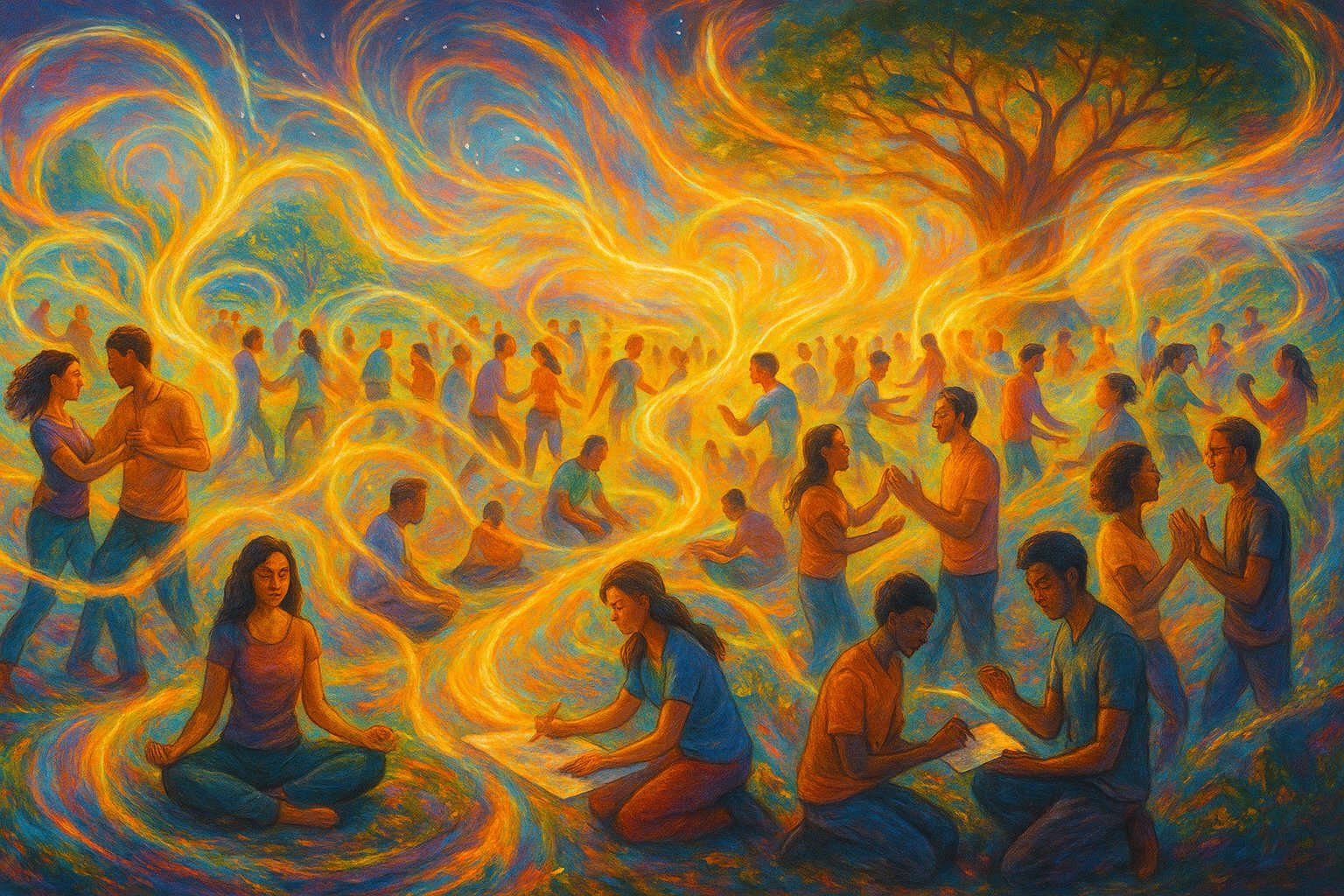
As a prelude to our reflection, let’s consider what “believe” really means. The Greek root, pisteuo, is robust and multilayered. It means “to have faith, to commit, to trust.” Intellectual assent is involved, but pisteuo is centered in the heart and gut and manifests relationally. In the Gospel of John, it is more like an existential conviction and trust that we base our lives on. And pisteuo (belief) is fundamentally relational:
with unreserved faith and trust in each other,
we commit everything to our communion.
This heart-felt, gut-centered sharing of all things – pisteuo (belief) – is the nature of our communion in God
But that’s not all that is disclosed in this pivotal story. There’s another crucial piece hidden in plain sight.
In the story about Thomas, it is important to notice that he is responding to the disciples’ experience with Jesus’ appearance the week before. In their telling, they were devastated, doors were locked, Jesus appears out of nowhere, says “Peace be with you,” and then shows them his wounds. Basically, the same pattern occurs again with Thomas: doors locked, pervasive fear, Jesus shows up, says exactly the same thing as before, and then tells Thomas to touch his wounds. When I was in seminary, my bible professor often said, “If something in scripture is repeated, it’s important. Pay attention.” No doubt that is true here as well. So, let’s work our way through this passage step by step.
Notice, the context is essentially the same in the two stories: it is just a short time after Jesus’ crucifixion and entombment, but his body is now missing, rumors of resurrection swirl around Jerusalem, and Jewish leaders are furiously trying to apprehend anyone they can blame. Fearful of being caught, Jesus’ disciples locked themselves in. We can imagine their world has been shattered and they are beyond distraught.
Into this maelstrom of misery, Jesus appears. Many interpreters want to emphasize the literality of Jesus’ appearance as a magical or supernatural spectacle. That is one way to look at it, but there is another way: to go deeper than mere spectacle to the spiritual reality to which it points.
A Proclamation and an Action
When Jesus appears in their midst, there is a proclamation and an action. “Peace be with you” and touching Jesus’ wounds are two sides of the same coin. Together they unveil an unconventional but core truth about our life in God. But again, we need to scrape away cultural barnacles attached to “peace” and “wounds”.
Peace: The New Testament word for “peace” is closely related to the Hebrew “shalom” which involves more than just a cessation of violence or an emotional tranquility. When Jesus says “Peace be with you,” he invokes a rich and ancient tradition of longing for human flourishing in right relationships and universal wellbeing. In Christian spirituality, we call this a divine communion: a covenantal sharing of all things, creating abundance, especially for the “least of these”.
Wounds: Immediately following his blessing of shalom, Jesus does not console or teach. He doesn’t try to persuade or encourage. Instead, he offers them a somatic encounter with his wounds, with his suffering. In so doing, he flips the conventional script for human wellbeing: the Christic pathway into the Divine Life is not primarily through our agency or effort but rather through vulnerability and suffering.
Mutual vulnerability and shared suffering
form the foundation of true pisteuo (belief/faith),
demonstrated as life-giving trust and commitment in communion.

If Thomas’ story were written in Christendom – within a king’s court or the Vatican’s magisterium, or by the latest proponents of Christian nationalism – Jesus’ appearance to the disciples would look very different. No doubt Jesus would arrive astride a white stallion, radiating brilliantly with overwhelming power and might. He would demand allegiance and promise his loyal followers earthly and heavenly rewards.
But Jesus’ resurrection did not follow a Hollywood blockbuster script and it doesn’t align with the imperialism of Christendom. Rather, Jesus’ invitation to Thomas to touch his wounds affirms that God’s presence is not abstract but incarnate—in the flesh, marked by suffering.
The crucifixion, death, and resurrection of Jesus disclosed the centrality of mutual vulnerability and shared suffering to divine shalom. He appeared to the disciples as that embodied revelation.
Marks of Our Own
If we look through Jesus’ resurrection for marks of our own, these are three I’m looking for in myself:
Vulnerability
Acknowledging our woundedness
Sharing suffering
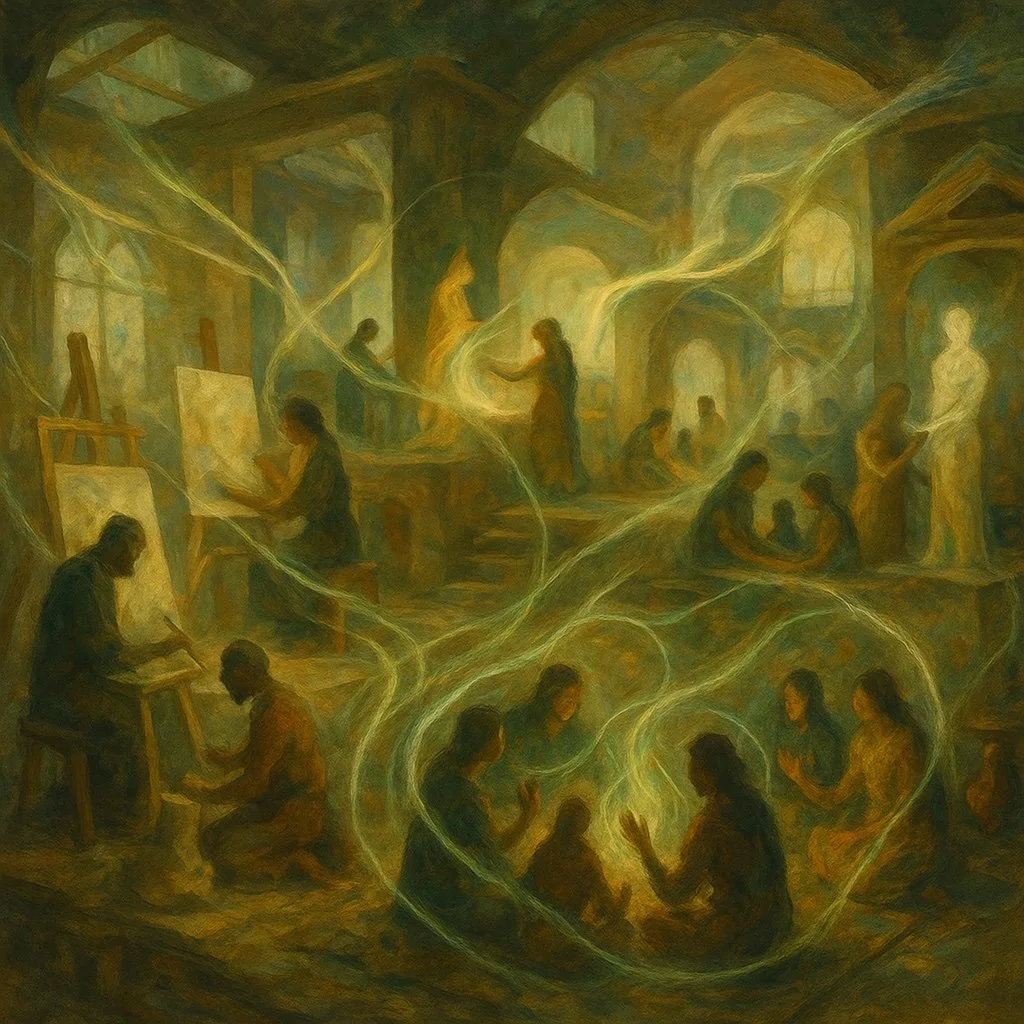
In mutual vulnerability, we might see the need to compare or preen be eliminated. In acknowledging our woundedness, the need to hide, deny, or defend may fall away. In sharing our suffering, we could come to know being bound together communally, in interdependence.
Doing so, we participate more fully in the communion of Divine Life, and find ourselves acting justly, loving mercy, and walking humbly with God.
What marks of your resurrections are you noticing?
How are you “believing” differently now than before?
Dwelling in Our Resurrected Being
Living on the Other Side of the Stone
Eastertide Examen and Meditation
To help us settle into and naturalize our resurrections, we offer a short examen reflection and a recorded guided meditation. We hope that the practice of reflection and meditation will be a daily discipline for you, for it is only through regular repetition that we are spiritually formed by our resurrections. Otherwise, if only episodic, resurrection power fades and we revert to default patterns.
We live out our resurrections through consistent, regular practice.
We invite you to enter into these meditation exercises as regularly as you are able. The questions are modeled after the Ignatian examen. Take a couple minutes to ponder and write your reflections on these questions in a journal or tablet. No need to over-think; all reflections are welcome.
Examen Questions:
How am I responding to darkness and unknowing?
What carried me through locked doors today?
How is new life changing me?
When ready, start the recorded meditation.

Consider incorporating the Examen and Meditation in your WeSpace groups.

Statement of WeCreating Authorship
This article was WeCreated with authoring by Robert Martin and and light editing by Beth Biery.
All of the wisdom, creativity, and spiritual emergence in ICN comes from the communal field of wisdom and spirit speaking in and through the “We.”
All text in this article is human-authored without the use of AI, according to our AI policy: 0 out of 10
All Images are open-source, used with permission, or created by ICN with the use of AI