
The Spiritual Practice of Community
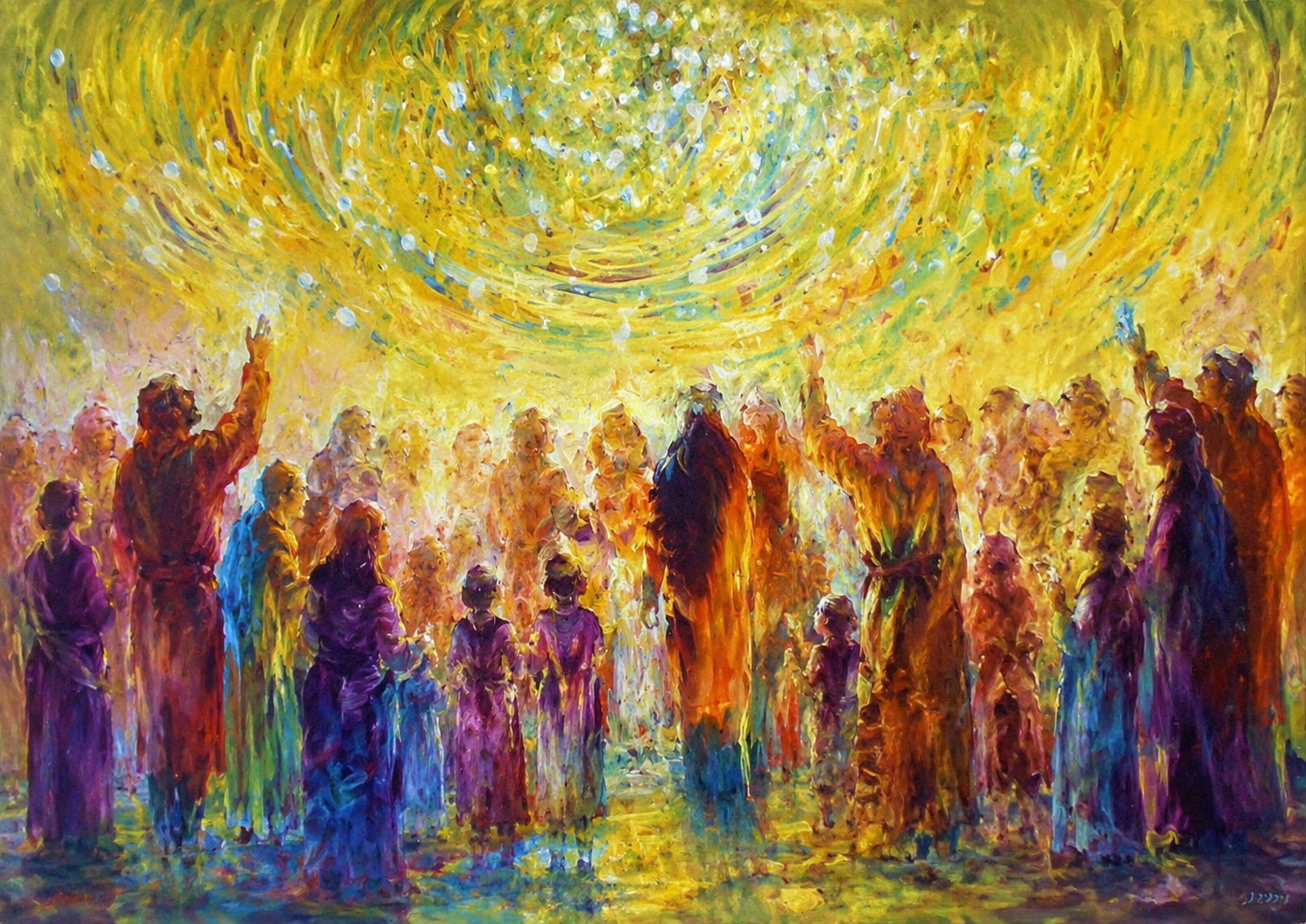
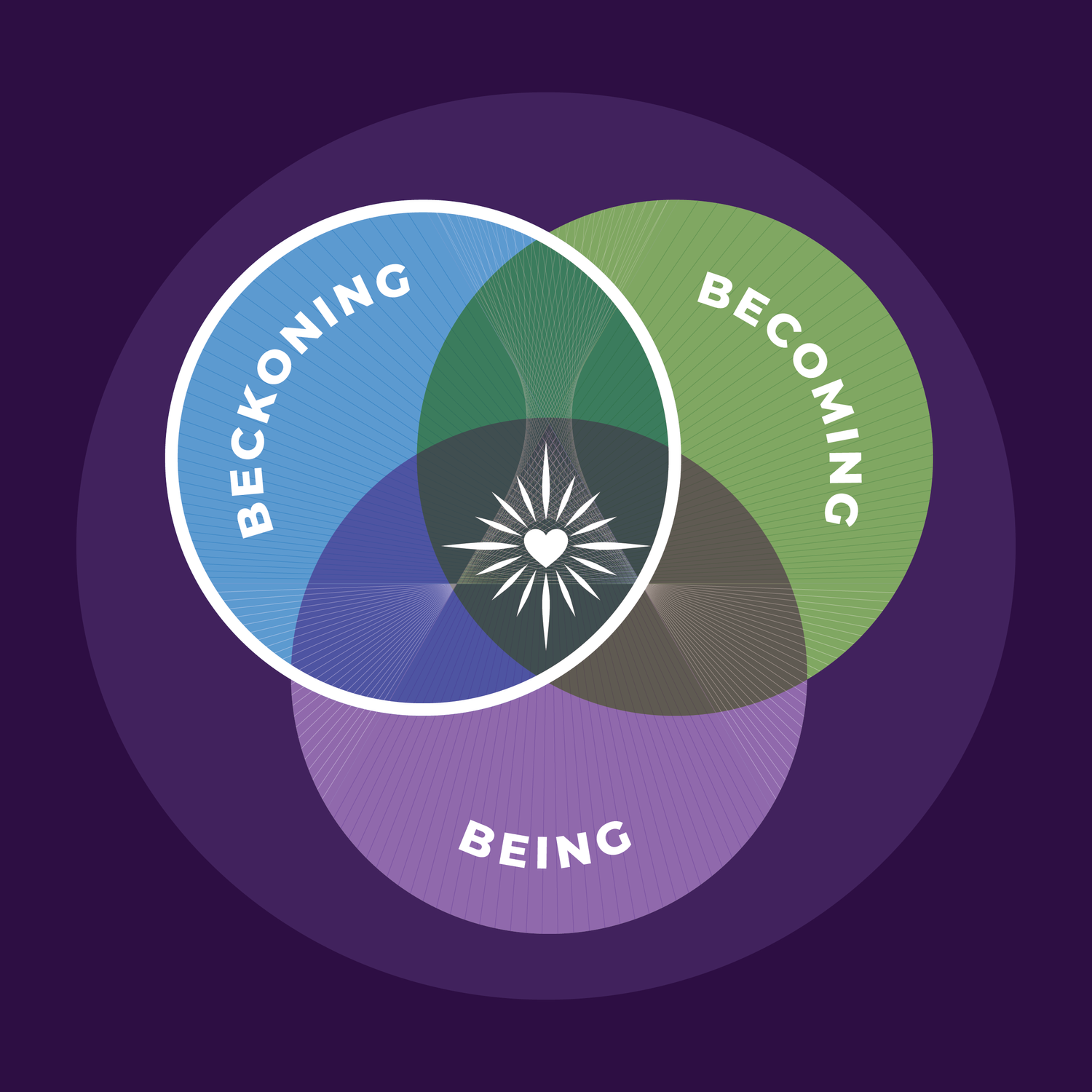
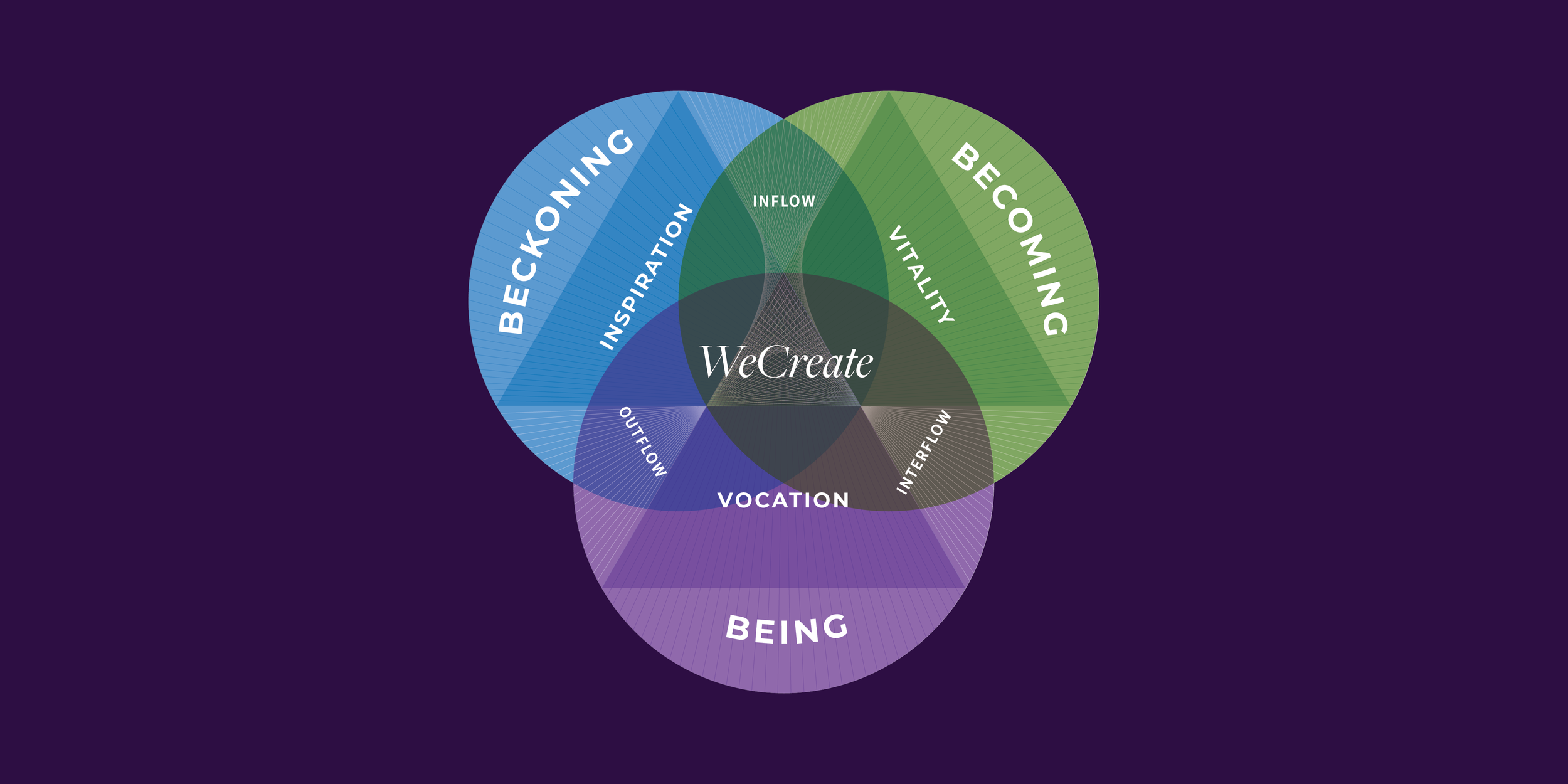
This week’s rhythm of loving evolution: Beckoning
We are offered a lure from Spirit, a call of the divine, an invitation to learning, opening, and hearing how God is beckoning us to become and be in new and deeper ways.
As you read this article, you are invited to listen for how spirit is beckoning you—and us, communally—into our divine participation and WeCreating the loving evolution of Christianity and the world.
Beloved Community – Part Two
ICN Living Lineage Series
In many religious traditions, the element of community has been seen as a byproduct of spirituality rather than a focal point. A result of a common interest or aim rather than a vital component of the spiritual work itself. There is the spiritual content and substance, and then there is the community that comes together around those focal points of teaching, learning, service, and spiritual practice. In most cases, community is just what happens along the way.
Churches these days are physically set up to host an audience with lines of chairs or pews facing forward. There is little to no engagement with anyone beside you built into the structure of the service (an interesting word for church gathering in its own right—who is being served?). The implicit message is clear: you are here for what is happening up front; who else is around you doesn’t matter that much. And while there are times for socializing and other events, these are usually at best seen as secondary to the central work and focus of the church.
According to a recent Gallup poll, 85% of Americans consider “social activities” a lure to go to church. And while spiritual community should always be more than a social club, people are clearly starving for connection. Most churches also have small groups or Sunday school classes where people can get to know one another a little better and share their lives, usually as they study or learn something together.
Some communities are more centered around spiritual practice rather than teaching/learning. Whether it’s sharing the liturgy together or gathering for regular times of prayer, the community comes around a common rhythm of life with shared times of prayer, work, and service. Even here, the implicit understanding remains: when we gather for spiritual practice, that is referring to the prayer, the work, the content of the time. The community is felt as simply the shared container. This way of community provides accountability and companionship, both of which are useful and significant.

But underlying these structures and forms is a pervasive individualism that orients us toward a personal engagement with the substance of our spiritual work, with little to no impact coming from the community—who is there at the time or who isn’t.
There is a freedom in this, in that we aren’t dependent on anyone else to do the work, but there is also a great loss. For we perpetuate the illusion that the essence of our spiritual work is something that happens between me and “God” alone (rather than God Being All of Us).
Community is not just something that happens alongside our personal spiritual pursuits, but is the vital and necessary calling—especially in this time—of coming into our “unity together.” Of participating in the interbeing among us to actively and necessarily realize that our divine nature is collective. That we must come into this deeper way of mutuality not only to evolve further in our consciousness, but perhaps even essentially for our survival as a species.
There is no true unity that exists only in the experience of a singular individual. And while diversity, in many forms, is a crucial and healthy element of unity, this is found together in the dynamic interplay of variety within a shared context.
But that’s the difficulty, isn’t it? Authentic and intimate community is a complex set of relationships. And relationships always take work. While the romantic idea of love is pervasive, the spiritual pilgrimage of walking the path of love is not always so illuminated.
Today, our communities of practice must deepen in practicing community.
Practicing Mystical Community – Starting Points
There are many ways we can learn to practice community that will bring us into greater health, wellbeing, and evolution in mutually beneficial ways. We’ll be looking at a number of them throughout this series.
But underlying each of these practices are two fundamental orientations for how we seek to practice mystical community in ICN:
1. Community is not just a beneficial human reality, but is also where we encounter divine reality—in and through one another. In this sense, it is a spiritual practice because we are seeking to engage with the divine in and through one another. As such, we are engaging in a mystical practice.
2. Our work of practicing community is not ultimately about what we get out of it. It cannot be self-referential. It cannot be oriented around personal benefit, for then we are simply using community as a self-help tool. We will benefit personally from the practice of community, and we can appreciate and receive that—but it cannot be the primary “why” or it simply won’t work. Deep community comes from a place of healthy and effusive mutuality.
Let’s unpack both of those a little bit, starting with the first one.
In orienting toward divine reality, we are not bypassing or foregoing our humanness. But rather than centering our practices of community around our conditioned selves, we are seeking to engage the mystical community of our “higher selves,” our “true selves,” our transpersonal communion—whatever terminology you prefer.
This of course comes through our personal stories, our embodied, incarnated experiences. And many of the practices of community we will explore meet us on this level. But we should be careful to not ultimately define ourselves or one another by these particularities. By the constructions of our personalities, our wounds, our compulsions, our proclivities, or any other limited story of self.
In this way, we are not centering the limited self as the prime meeting place in community. It belongs certainly, but it does not hold center stage as it so likes to do—especially in a loving community. Yes, we receive at this level of being and can be deeply nurtured. But our deeper being calls us to more.
Only integrating our deeper, divine being in community has the possibility to bring us together beyond personal preferences and cultural commonalities.
One way I like to define “the mystical” is the Immediacy of Ultimate Reality. That we can come into direct contact with God at any time.
Many of us have become adept at casting off the ecclesiastical barriers put in place to require an intermediary in our access to the divine. We have learned that God is not found only in church.
But so too do we, at times, place the barrier of our “self” between us and the immediate presence of the divine in and through us. We think we are separated when we are in pain, when we are in shame, when we are following the unconscious patterns of coping or relating, when we are in our head too much. We are all caught up in the blueprints of our designs at how we live our lives. And so many of these are sourced in origin stories of separation, individualism, and modern culture.
And so we need our spiritual communities, and practices of community to not simply reinforce these patterns on a collective level, but truly seek to transform us into emerging divine consciousness coming forth in and through us—individually and collectively. To cultivate and empower ways of being together that seek to bring us directly into Presence among us.
This is practicing mystical community, rather than simply a gathering together of mystics (a herd of cats, so to speak).
To be a mystical community is to embody the deep interconnections that exist among us not defined by shared ideas, shared spiritual backgrounds, or even by the shared methods of practice. These are channels and avenues into deep meeting deep. The field of love.
Where we can share in the depths of our spiritual experience, in the mystical consciousness of divine presence in, around, and through one another. Actively inhabiting the larger body of God, participating in the flow of our deep interconnectedness beyond our barriers of individualism.

Healthy Personhood Fosters Healthy Community
And at the same time, we are not dissolving our barriers into an amalgamated herd. In our longing to be a part of something larger than ourselves, we are not negating our own personal story. Our precious personhood.
When we relate to community, we can easily fall into roles and habits of interpersonal compulsions writ large. That may be over-serving to feel valuable, taking charge to feel more powerful, passively complaining or gossiping to feel superior, or any other shadow pattern that further reinforces separateness through self-centered or self-serving relationality.
This goes back to our second fundamental orientation, that we are practicing community not just for ourselves. We aren’t using community as a larger container for our woundings and aspirations (often unconsciously). Nor are we negating our precious uniqueness and personal power.
These are ways of being in unhealthy, co-dependent community. While we are reliant on others in many ways, we are not using them or the community to simply fulfill our own ego needs. We aren’t completely bypassing these needs, but we do not hold them as our primary driving force for being in community. We are seeking to meet one another in healthy mutuality.
In healthy mutuality, we are participating with one another beyond reciprocity and into interflow. We find ourselves together in a place of open freedom, able to respond to the flow of spirit arising and moving in our midst with a loose hold on our personal needs, while also ready and looking to bring forth our unique giftings, skills, and passions to contribute to the community in love and creative generativity.
This is where our mutuality becomes effusive, arising from the great gift of our precious personhood and the divine communion of which we are. Community flourishes when we are embracing our uniqueness—our inner power, giftings, passions, and vision—and opening to how they overflow in loving service and dedication to one another and the collective work of God in our midst.
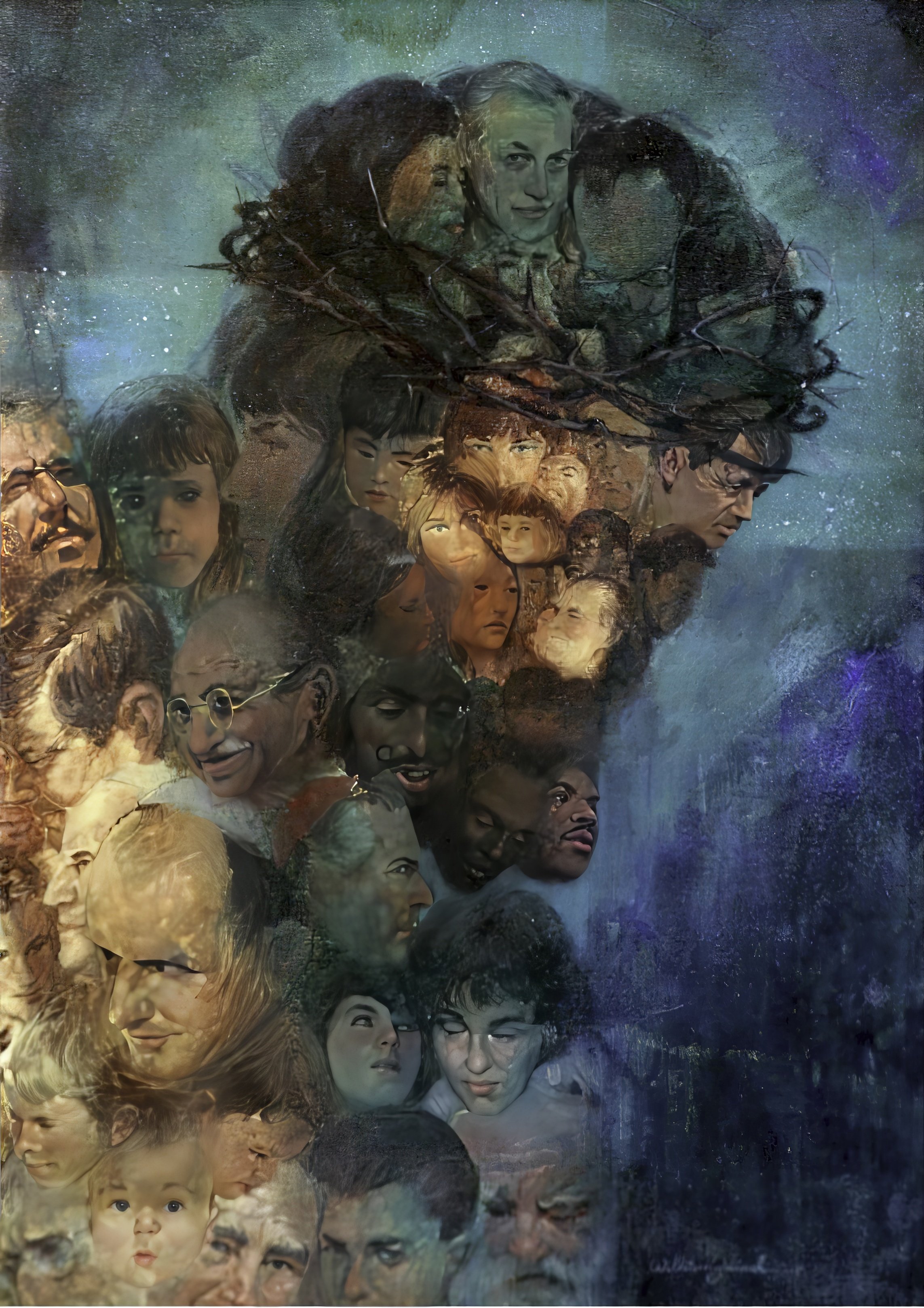
In His Image by William Zdinak
Receiving and Owning Our Mystical Communality
While we explore ways of practicing community throughout this series, it is again crucial that we don’t come from a place of being consumers of community. For it to be a healthy practice, we need to be active participants and living “members.” Not “membership” in terms of exclusivity and privilege, but the ownership of truly being a “part” (member) of a larger body.
This is one of the earliest images of the church, The Body of Christ.
In the mystical enactment of this, it is not just a metaphor for different roles and functions we play, but an actual collective embodiment of the spiritual and energetic realities of our communal body.
It is an expression of who we actually are on levels beyond our individualism. This doesn’t usually come naturally or easily to most, for we have usually been trained into our separateness from a young age. We will need to actively cultivate this experiential reality. We will need to initiate ourselves and one another into this way of being.
On this path we can discover a deeper cohesion forming among us. A synergy of confluent life present in our midst. We can discover spiritual intimacy with others on the soul level. We can discover the deep joy of effusive mutuality, working together from the divine depths into the creative unfolding of loving evolution manifesting in our time.
This is receiving the great gift of mystical community in our depths—not approaching community as simply another amenity of church or companionship along the way, however beneficial that may be. It is coming from and owning our collective participation in the outflow of the loving body of Christ coming to be through us.
To come into this way of being, we will need various forms of practices of community. Next week, we’ll bring forth some of these practices, as well as an overarching energetic “container” that encompasses more than the limited word “practice.”
Love One Another
As we engage this article and the Divine Reality of community,
What beckons you?
How is love drawing you more into community here and now?
Watch or listen to the season finale of the ICN Podcast on Precious Personhood!
Click here to listen on Apple Podcasts
Click here to listen on Spotify
Click here to watch on YouTube
Subscribe, give a 5-star rating and review to help others find us!
Statement of WeCreating Authorship
This article was WeCreated with authoring by Luke Healy and editing support from Beth Biery.
All of the wisdom, creativity, and spiritual emergence in ICN comes from the communal field of wisdom and spirit speaking in and through the “We.”
All text in this article is human-authored without the use of AI, according to our AI policy: 0 out of 10
All Images are open-source, used with permission, or created by ICN