
Our Christ Commission – Divine Communion
Through Eastertide we have been journeying through exploring the resurrection of Jesus as a model and catalyst to live into our own resurrections more fully. To live the divine vocation of resurrection as ours, here and now.
With many thanks to Robert Martin and Beth Biery for their wonderful offerings and invitations, reflections and examen practices—which are all available to revisit and continue to practice on our website and SoundCloud page.
And now we arrive at Pentecost in the liturgical calendar. Though Jesus gave his great commission before his ascension, it wasn’t really taken up with power and life until the experience of Pentecost, when the spirit of God—awakened divine consciousness—came upon the disciples while they were gathered together.
As we came to in the culmination of our Eastertide journey last week, this is a great co-mission of communion, which arrives in community and lives in resurrected unity. And Pentecost is the great commencement!
In light of our Christophany—the way we manifest God-Being-Us in this life—born unto us through Advent, inhabited through releasing our less-than-divine stories through Lent, and re-created through our resurrection transformations during Eastertide, Pentecost now both calls and empowers us to more fully come into this Christ commissioning, to more truly manifest our divine vocation in this world, and to more deeply inhabit living in, through, and as Divine Communion.
We have been resurrected into this communal unity!
Now, will we live it?
In this writing, and those to follow in the weeks ahead, we will immerse ourselves in this divine communion through focusing on “Beloved Community,” which is one of the fundamental living lineages of ICN. We’ll revisit some of the core, foundational writings on this topic from years past, particularly how we “practice community” together—our ways of engaging in processes and practices together to deepen, inhabit, and be divine communion among us.
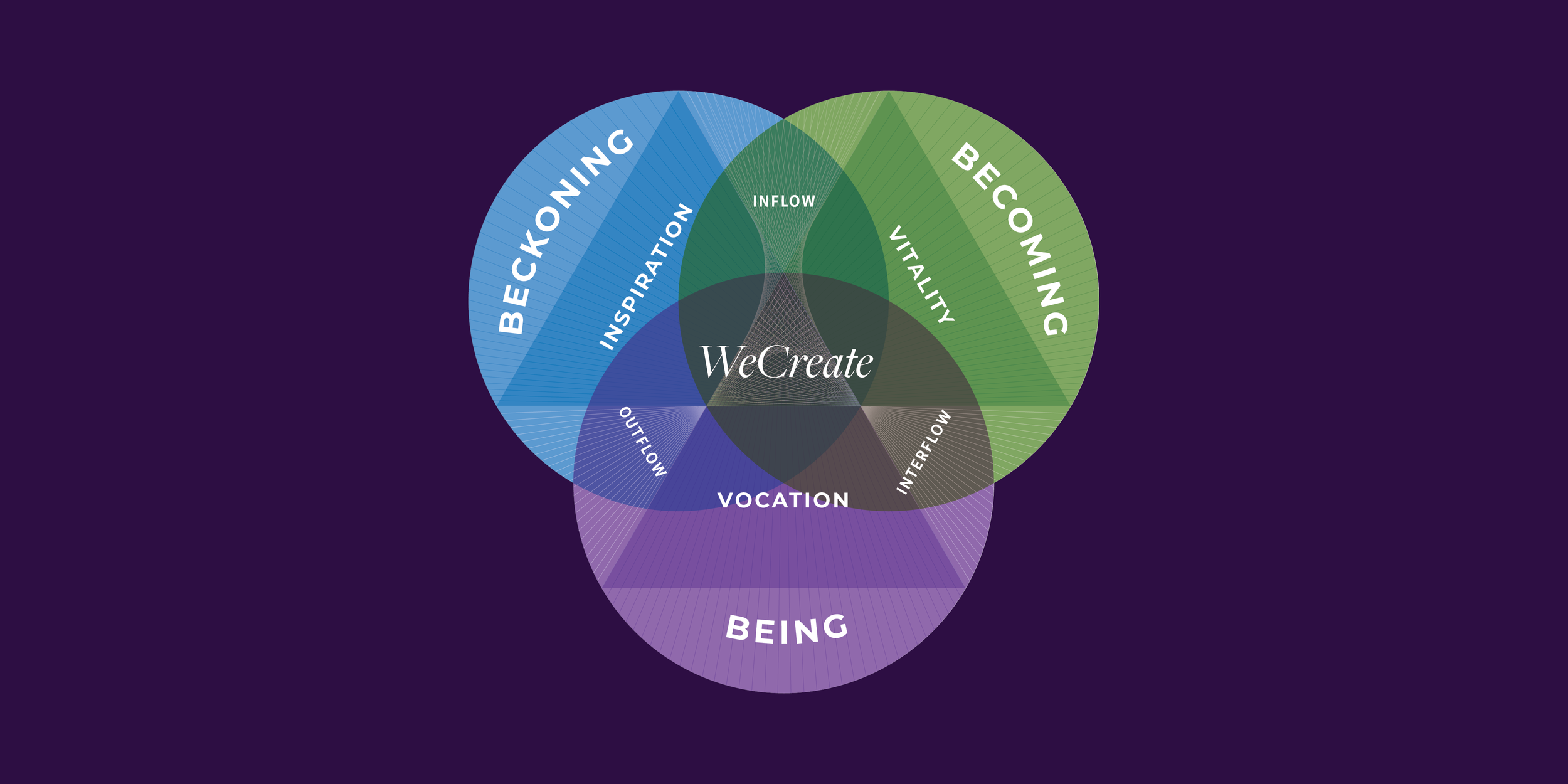
This week’s rhythm of loving evolution: Beckoning
We are offered a lure from Spirit, a call of the divine, an invitation to learning, opening, and hearing how God is beckoning us to become and be in new and deeper ways.
As you read this article, you are invited to listen for how spirit is beckoning you—and us, communally—into our divine participation and WeCreating the loving evolution of Christianity and the world.
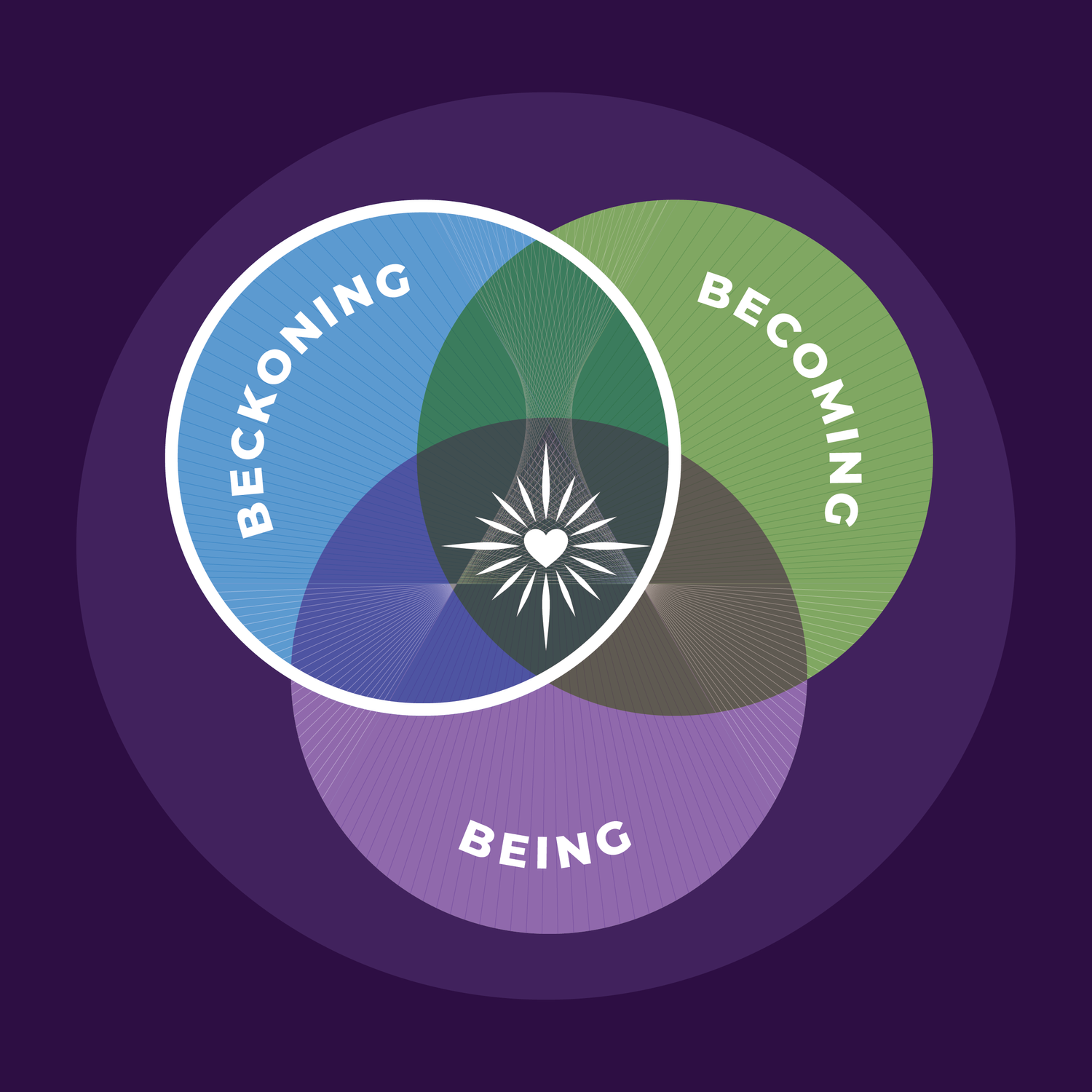
The Beckoning to Beloved Community
ICN Living Lineages Series
What makes a beloved community? How do we define ourselves, personally and collectively? What are the indicators we decide to name as the primary symbols trying to point toward who we are?
On a collective level, for groups and organizations, this can become a little complicated. What is the commonality that brings us all together? Sometimes it’s just a paycheck. Sometimes it’s a hobby or interest. For many religious and spiritual groups, it has so often been defined by a shared system of beliefs. It can also be about shared practice and a way of life together.
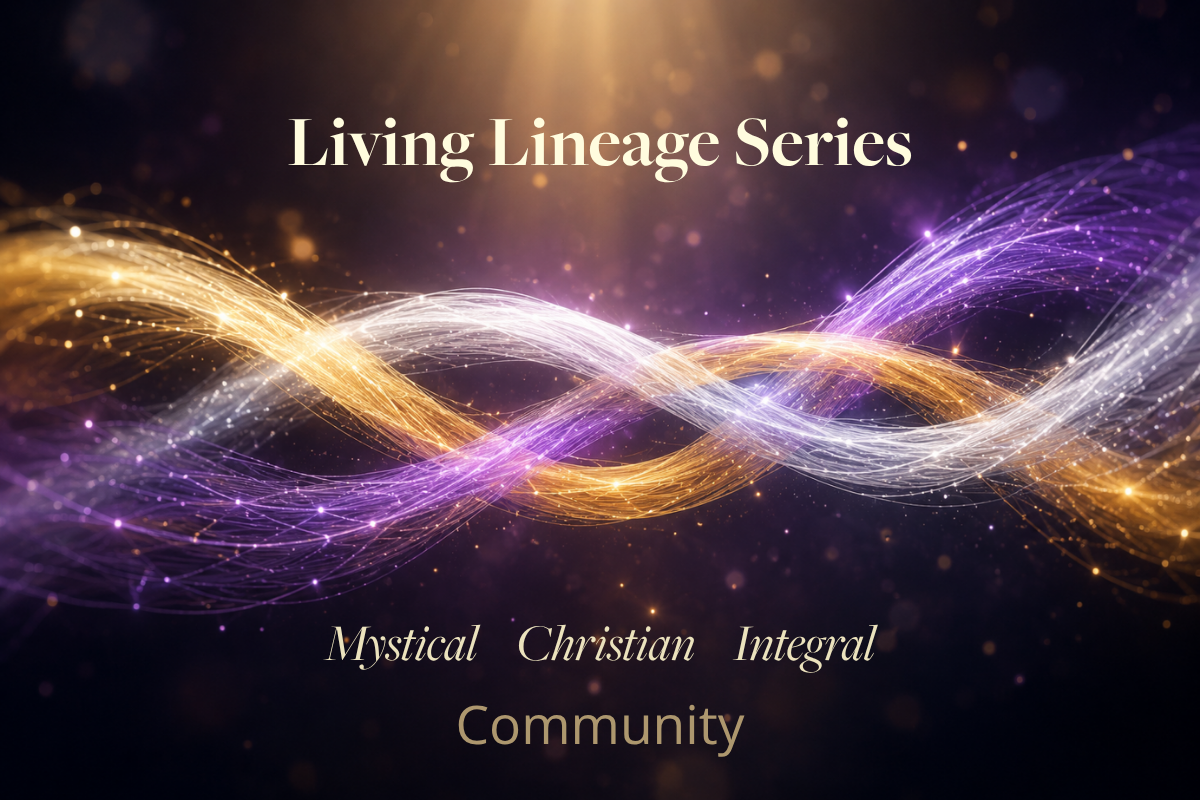
In ICN, our living lineages—Christian, Integral, and Mystical—are descriptors of spiritual and philosophical traditions. They are orienting generalizations, the emanations of ideas and ways of being that can draw us together and come into a living and breathing community. This descriptor, community, is as much a living lineage as the others—maybe even more so, as it is the alive, collective organism that gives flesh to concepts, theories, and practices. And then becomes something more.
Ideas, beliefs, and common traditions can be ways we help recognize ourselves as different from and set apart from others. They can also help us come together in finding our people. To bring us into a place of commonality that can create the conditions for connection.
However, too often community is seen more as a byproduct of our conceptual markers and mental orientations of what we believe. These so often end up defining why we’re together “in the first place.” Community is just a secondary result of our shared beliefs or practices—rather than a fundamental element of why we’re here and who we are. This is a result of our cultural shadow of individualism, that community is about being around others who like to do what I do. Think the way I think. Or are the way I am.
This self-referentialism is so ingrained in our culture of consumerism and entertainment that we can totally miss one of the greatest gifts of deep community—that it can take us beyond ourselves. It invites us to really come into experiential participation in the spiritual reality of our oneness, of our deeper unified field. To live into the liberating and bonding truth of our interbeing. As the African philosophy of Ubuntu expresses so beautifully:
I am
because
we are.
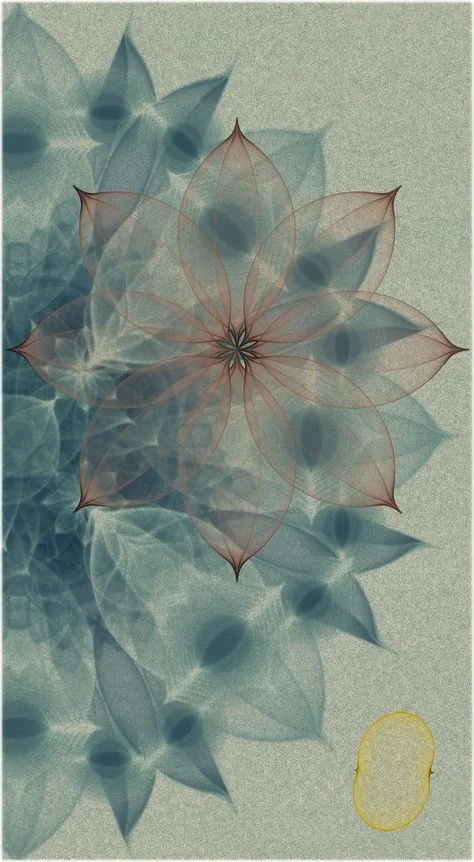
Personal Identity & Communal Interbeing
To be taken beyond ourselves, we need to hold ourselves with a certain degree of freedom, maybe even playfulness. If we’re too serious, too locked into our ideas and our rigid sense of who we are as we define ourselves individually (or collectively), we’ll just continue to bounce off one another when our edges confront—often with a little painful chipping off as a result.
In truth, our borders are not quite as firm as we often like to think. And sometimes, somewhere deep inside, we not only know this to be the case, but we long to experience it more fully. This is the heart and soul’s longing to re-mind us of our fundamental interconnection and enduring interbeing. We are not separate beings.
Our mental categories that split the field are often in place to protect us, acting as a survival reflex to assess threat and danger. Our gut instincts can also help us in this way. And we still need these faculties in our lives. We need them to help us discern and individuate, to step back and rely on healthy boundaries and barriers. Yet, it’s so easy for that fear to take over and completely run the show. But that’s an incomplete truth and limited way of living.
We need our shared understandings to be resonant enough to bring us into the same field, but also broad enough so that we can hold them loosely in the safe and loving context of the community. To not use them to sequester ourselves off and create further divisions whenever we encounter disagreement, conflict, and tension. To not retreat back into the story of separation.
A common error of modern society and especially in religion is the faulty belief that this could be avoided if we all simply believe the same thing, or if we were all educated well-enough so as to know all that we need to know in order to ____. This thing that we put in the blank is nearly always something that we already believe and know and just want others to agree with. Self-referentialism again in the guise of communal growth and action: bringing the others to where I am.

Practicing Divine Communion
Community is not about “being on the same page”
but co-dwelling in the same heart of love.
It is entering the shared WeSpace of our interbeing and our collective becoming. To be open with one another for the possibility of emergence—the blossoming of something new coming through us together. Of new ways of being and loving transformation coming forth in the here and now.
We can even understand this as our participation in the resurrected body of Christ—alive and awakened in the resurrected collective form of divine incarnation in this day and age.
This happens most fully in generative community, integrated with the fully embodied interflow of our whole being: mind, heart, womb, and feet/body. Personally and collectively.
To do this, we need to experience it in a place of safety, trust, and deep love.
Which is why we practice community.
This goes back to community not just being a byproduct of other shared activity, but a key element of who we are and what we do together. ICN is a loving community. A global community of dedicated mystical practitioners, which we become through more than just sharing spiritual practices like prayer and meditation, but also through the spiritual practice of practicing community itself.
So how do we foster and seek to more deeply cultivate healthy community? How do we choose to engage in ways that are life-giving and lead us into more generative intimacy? How do we handle the stickiness, the stepping on of toes, the wounding? What do we do with resonance and dissonance? With busy life schedules and various other limitations?
How do we truly inhabit our divine communion in and through our living, breathing, shared common life together?
In the weeks to follow, we’ll be exploring ways of beckoning, becoming, and being in divine communion, living our Christ commissioning through practicing community, directly engaging these questions and more.
Love One Another
In ICN, our living lineages—Christian, Integral, and Mystical—are descriptors of spiritual and philosophical traditions. They are orienting generalizations, the emanations of ideas and ways of being that can draw us together and come into a living and breathing community.
As you engage and inhabit these streams, you are WeCreating the larger field of ICN.
“A cord of three strands is not easily broken.”
— Ecclesiastes 4:12 (CSB)
Which strand or descriptor feels most resonant with your divine story so far?
Mystical…Christian…Integral
Which beckons you more deeply into greater communion at this time?
Statement of WeCreating Authorship
This article was WeCreated with authoring by Luke Healy and editing support from Beth Biery.
All of the wisdom, creativity, and spiritual emergence in ICN comes from the communal field of wisdom and spirit speaking in and through the “We.”
All text in this article is human-authored without the use of AI, according to our AI policy: 0 out of 10
All Images are open-source, used with permission, or created by ICN