
Living in the Communal Body (of Christ)
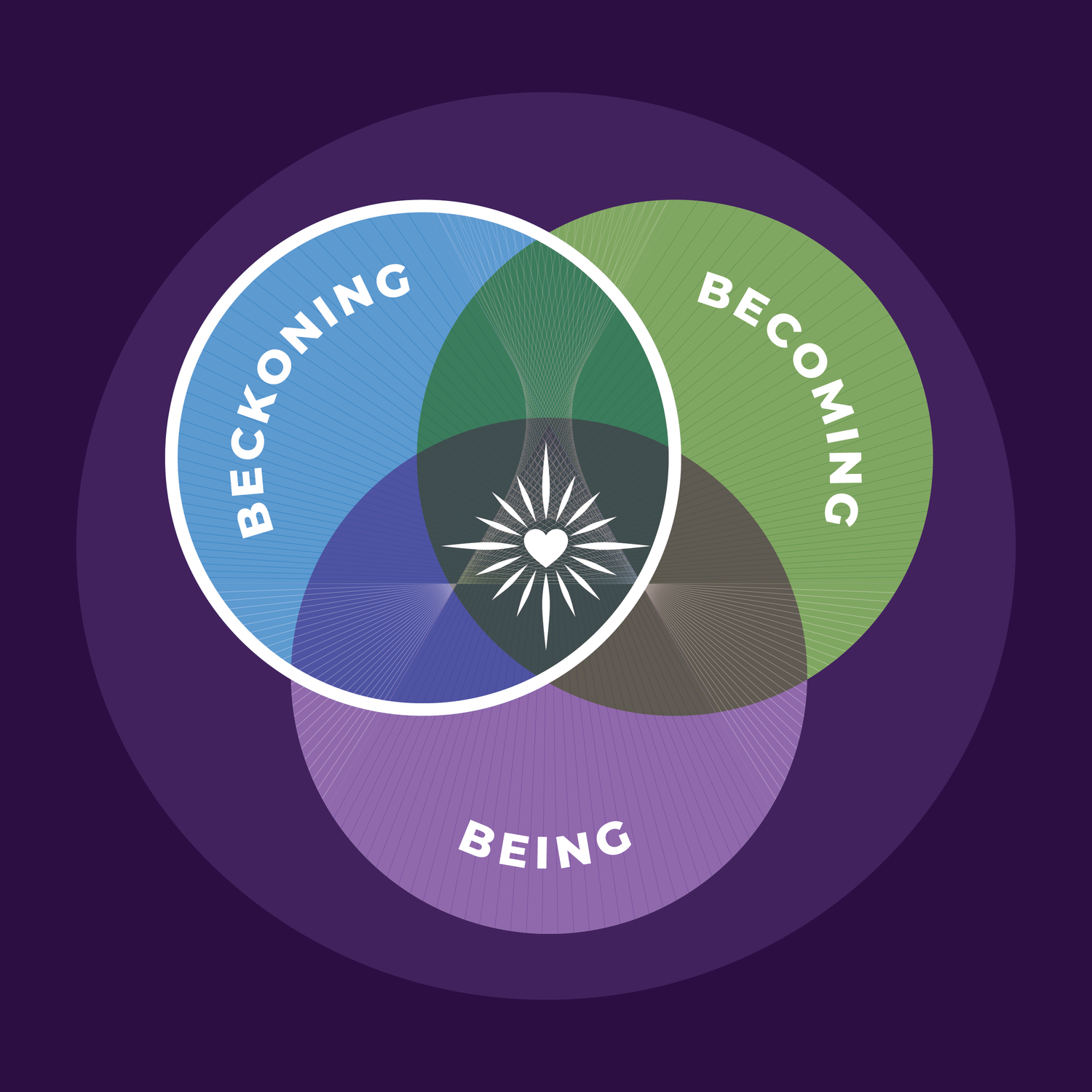
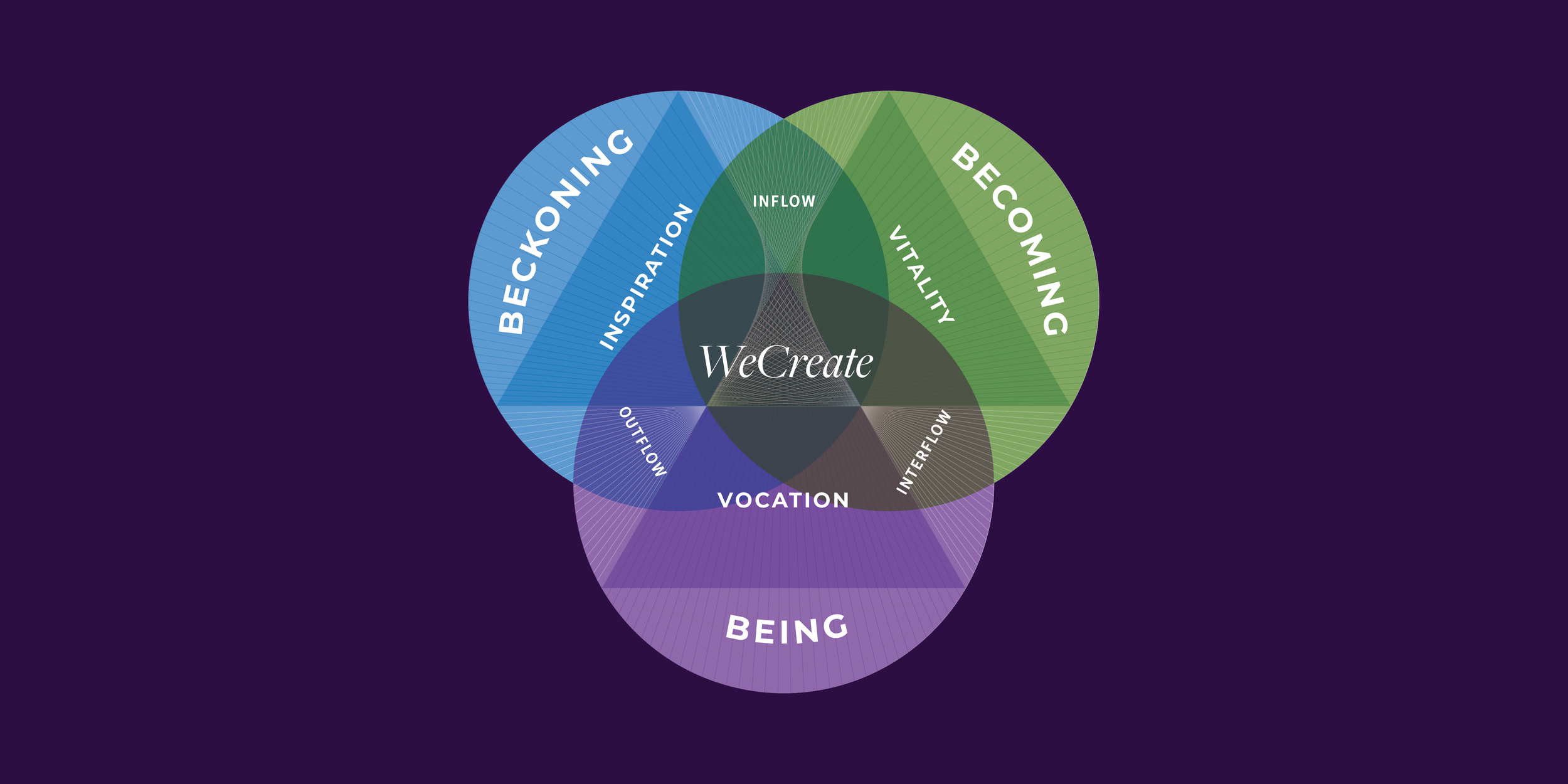
This week’s rhythm of loving evolution: Beckoning
We are offered a lure from Spirit, a call of the divine, an invitation to learning, opening, and hearing how God is beckoning us to become and be in new and deeper ways.
As you read this article, you are invited to listen for how spirit is beckoning you—and us, communally—into our divine participation and WeCreating the loving evolution of Christianity and the world.
Beloved Community – Part Eight
ICN Living Lineage Series
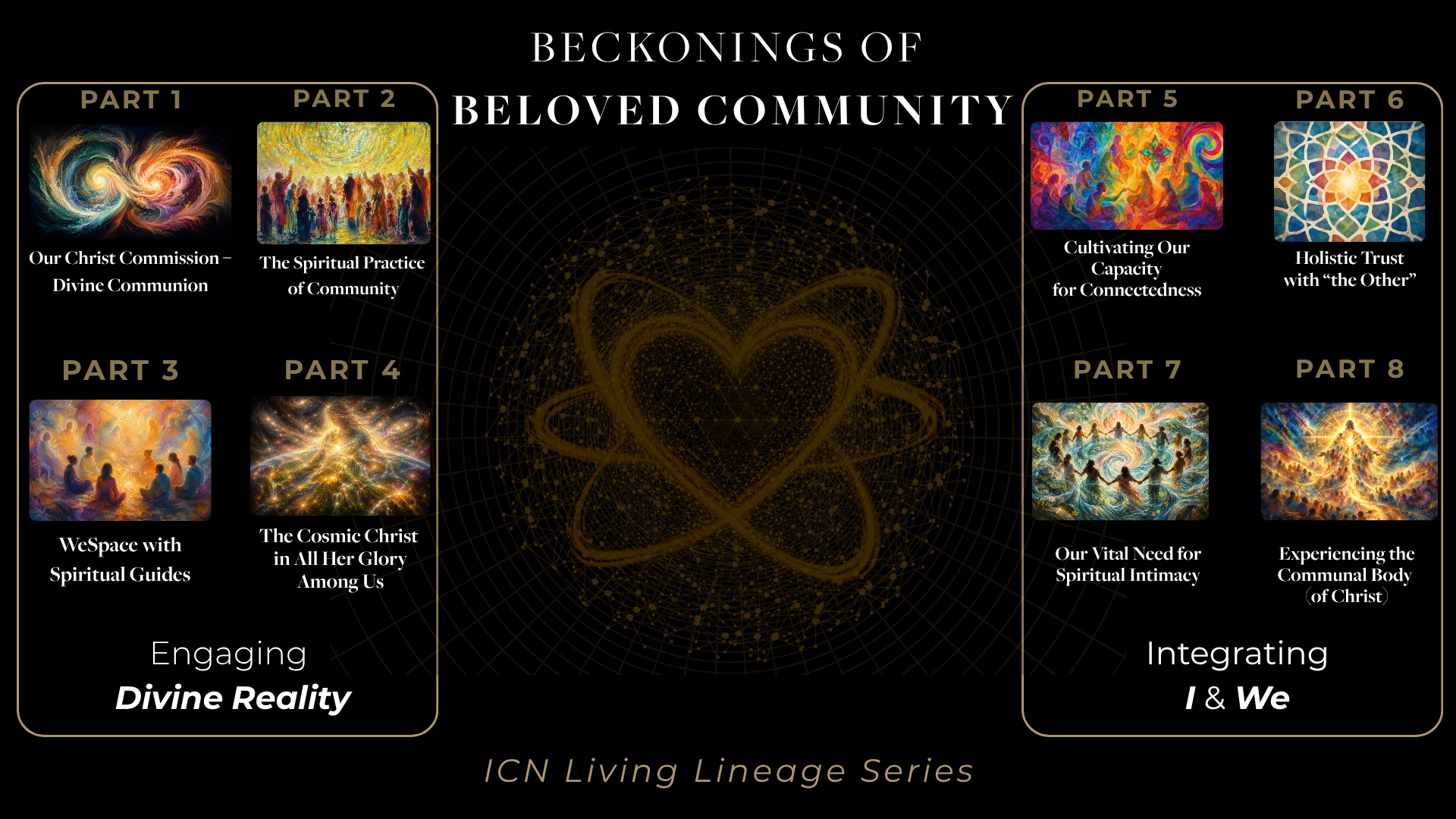
As we now reach part eight of this series, we have been with our two primary, fundamental orientations regarding Beloved Community. Parts 1-4 went through the different aspects of divine reality we integrate into our holistic experience of communion. And after, we have been considering different components of healthy and effusive mutuality, which relate to the interplay and integration of both the I and the We.
Now, we turn to how we inhabit the reality of this communal body, so that we can not only just spiritually experience the dynamics of the body of Christ, but also create and bear life from this larger being—which is who we truly are. We are this and we can act from this in service to the loving evolution of Christianity and the world.
Rooted in the ground of trust, with our capacity for connectedness growing more and more, and bearing life from the vitality of our spiritual intimacy, we find a whole new level of collective participation in a holistic vision of inhabiting the mystical body of Christ communally.
In the experience of our individuality, we often unconsciously adopt living from the story of separation. We separate the external world into subject and object, that which is “in here” and that which is “over there.”
As we begin to awaken to the experience of our shared interiors, of the we-space that constitutes communal energy, mutual knowing, and interbeing on a mystical and very real level—that which is “in here” together—we expand beyond this limited story of individualism. We come into the experience of our intersubjective reality. This is where the subject of the sentence becomes plural: from I to We. Not just as a collection of separate parts, but a real and dynamic collective. How do we experience this?
Often, we awaken first to participating in the reality beyond the boundaries of our own skin through experiences of transcendence. We are lifted beyond ourselves. Carried away by beauty or some grand invitation. We have an “out of body” experience. In these types of experience, we are drawn outside of our interior confines. Yet, they are happening in our “interior” reality, not in the external physical sense, but in a way that shows us that we are not limited to the individual, internal space within. We are opened to a broader and deeper participation with reality.
These transcendent experiences most often speak to us of the connection we have with nature, with humanity, or with the whole cosmos. This is coming into our participation with the “All,” the expansive belonging and unbound connection to our cosmic and universal community.
As liberating and necessary as this expansion is, it is incomplete if we only come back to continue living our lives as individuals. It will remain amorphous until it can take shape in the form of a collective. Until we particularize into a communal body that substantiates in the here and now.
That’s what mystical community is all about.

The Body of Christ Becoming
Lest we think this is some new age woo-woo stuff (which isn’t all bad, we might add), one of the oldest Christian metaphors speaks to this reality—the body of Christ. By metaphor, I do not mean something that is only real in a symbolic sense, but something that is also real in participation with our magic and mythic structures of consciousness, with mystical reality.
We can actually experience our participation in the body of Christ in a mystical sense. Though it may help us come into that more if we distinguish it from some common misperceptions of this metaphor.
First of all, the body of Christ is not the church. Or, at least, not the institution of “church” or what we often think of when we hear that word. Too often, the conception of church and the body of Christ is associated with a separation from the rest of the world. A church body apart from “secular” or nonreligious people.
This connects to the second misperception that can come around the idea of “Christ,” which is the limiting particularizing onto Jesus. Jesus embodied the Christ reality, but it was never limited to only him. His message was that this divine realm (traditionally rendered as “kingdom”) was “at hand.” That is, it was present here and now in us. Not as something we have to join or receive from the outside, but as the fabric of reality in our midst.
God is interfused throughout all things. Christ is the divine manifesting forth in anything that is becoming what it already always is.
To dwell in our Christ consciousness is to inhabit, to embody literally/mystically in our bodies—personal and collective—divine reality in the world. In our lives. In the body of Christ becoming through us. Well beyond only us, of course, but also necessarily with us embodying our part.
We come into the mystical body of Christ when we start belonging to this reality within. In the interior of ourselves together.
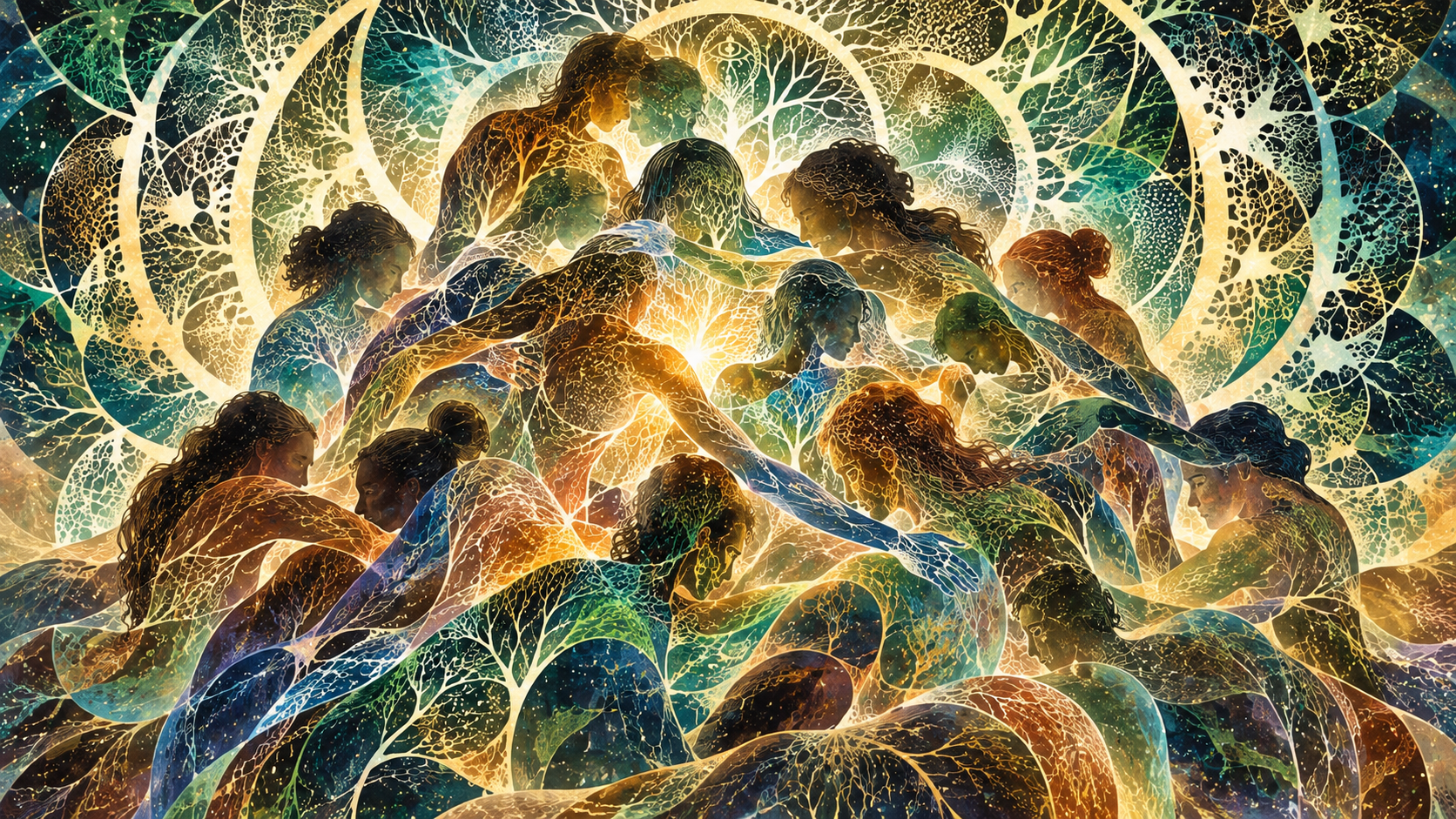
“For most of its history, brain science has studied consciousness one skull at a time. That is starting to change…researchers can now observe what happens between brains, not just within them.
What they find is striking. When people meditate together, collaborate on a task, or fall into genuine conversation, their brain rhythms begin to move in step. Researchers call this inter-brain synchrony. It tends to appear during deep interpersonal engagement, often in regions associated with attention, social coordination, and shared meaning.”
Belonging to Ourselves Collectively
We already are participating in the body of Christ and in the inter-related reality of which we are a part. But how much are we consciously aware and intentionally engaging in this larger reality?
So often our general operating procedure is functioning solely from the mindset of the individual. What do I need or want in this moment? What is it that I have to do today? What am I feeling in this moment? We have described this default orientation as self-referentialism.
And while this is somewhat natural, there is also a deeper undercurrent of possibility. A deeper will that moves in subtle and intuitive ways. A deeper perception that senses beyond the immediate and personal. A deeper mystical reality that permeates and interflows among and throughout us.
In our WeSpace groups, we practice Resonating Prayer, an intentional form of engaging in collective, mystical interconnectedness. We focus on one other person to deeply attune and share from this space of love and spiritual intimacy. The more we practice together, the more we will discover a deep interrelatedness among us. Not just an “I” relating to another “I,” but a “We” reality of interbeing experienced in the collective field among us.
Here, we begin to come into our intraconnectedness, to use the term coined by Daniel Siegel. This is a greater experience of wholeness than two separate entities engaging together for a period of time. It is a shared inner experience within our larger “body.” It is not just Mary relating to Jane, but Mary and Jane (and others) experiencing something, being something which they are together.
We know that this happens at the quantum level. That the deepest substance of our materiality does not stay within our singular bodies but is nonlocal and constantly entangling with that which is beyond the boundaries of our skin. At the very least, this provides a plausible scientific explanation for what we experience in collective mystical consciousness.
As we experience this more, we open up to more than our “self” as only a singular form. A truly intersubjective reality that has a collective awareness and energy of which we are part. Especially at first, we experience it primarily through our unique particularity, but its reality isn’t confined to how this “we” is showing up in me. We all have a subjective experience within it.
It doesn’t give up differentiated inner experience, but it expands our sense of capacity to recognize and act from an interior consciousness experience that is bigger than my singular self alone. Siegel calls it a “MWe,” because both “me” and “we” are present. (As is a universal “All” as subject, which we might understand as “The Mind of Christ,” we’ll consider more next week).
These senses and movements are not coming from a separate being like a God in the sky (though they can come through another, a guide, nature). This awareness is more like the firing synapses of spirit that we learn to recognize as we come into our communal mystical body. Like a child learning to walk, we must learn how to operate in this body and reality that is ours.
It belongs to us. We are the subject of these movements, of these senses, of this will. God-Being-Us moving in embodied, incarnated reality—in communion. That is our larger identity. And we are growing into the still-evolving, mystical organs of perception, “morgans” if you will.
“A secret potentiality which has to be discovered and one for which there are no organs in his present physical or mental system: he has either to evolve a new organ for it or else adopt or transform existing ones.”
– Sri Aurobindo
Next week, for our Becoming invitations, we’ll consider how we might experience this consciousness in each of our centers of spiritual knowing as we come into greater awareness of our participation in this communal body.
Community as Ecosystem
In an integrated spiritual life, we go beyond the limited confines of our individuality and discover that reality is so much more than our solo experience. Through transcendence, we come into the oneness and unified whole of all things.
“A ‘We” is ultimately how spirit experiences itself.”
– Ken Wilber
– Ken Wilber
And then we also integrate the particular, the form and shape of incarnation in our midst, the expression of the body of Christ in specific and present nature, substantiating in our lives. And not just our individual lives, but the collective life of the communal bodies of which we are a part.
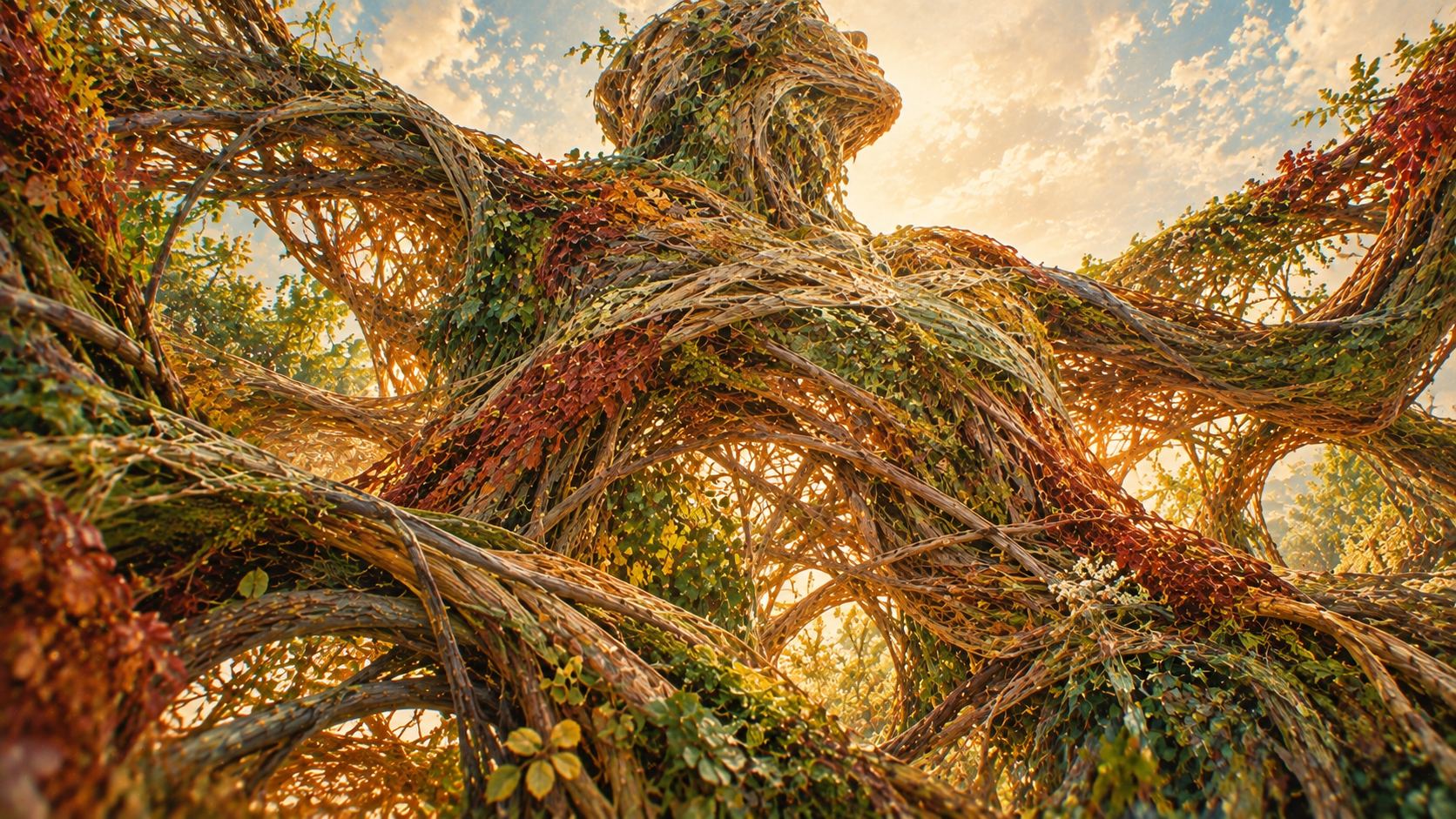
Here, we might draw on the metaphor of an ecosystem. While we used to be more concerned with separating the parts and classifying the various individual plants, animals, and species. Now we are learning and seeing more and more how interdependent and connected it all is. The symbiosis is extensive, and the deeper down we get—on the quantum and mycelial level—things are sharing and interacting constantly.
To interact, there must be the various parts. There must be a mutuality of giving and receiving, a feedback system of communication that flows with information, energy, nutrients, and life. This interflow is what makes life thrive and grow.
Living systems come into thriving health through diversity and cooperation. Through open channels and also through healthy boundaries. These are flexible and changing—they are responsive to the present reality of what is needed and what is possible.
How does a community become more than just a collection of individuals with a common interest or practice?
Through experiencing and manifesting our communal body, growing up together into healthy life and expression. This gestalt is what exponentially expands what is possible and how we might come to evolve into what we have always meant to become—not simply as individuals, which we are and are not—but as new communities of effusive mutuality, learning how to be conscious of our shared divine reality and participate actively in our living interbeing.
Not just because it’s a tantalizing idea or a way to escape the trappings of individualism, but because it’s more in line with the reality of who we truly are. Not solo monads only trying to compete, evolve, survive. But members of the divine body of Christ alive and evolving on the earth today. Bringing the new life the world is desperately craving.
Coming more into being throughout varied and dynamic circles of community: intimate, collective, and universal.
The forms and shapes of the bodies of God, bringing to bear the new heaven and new earth, together.
Here and now.
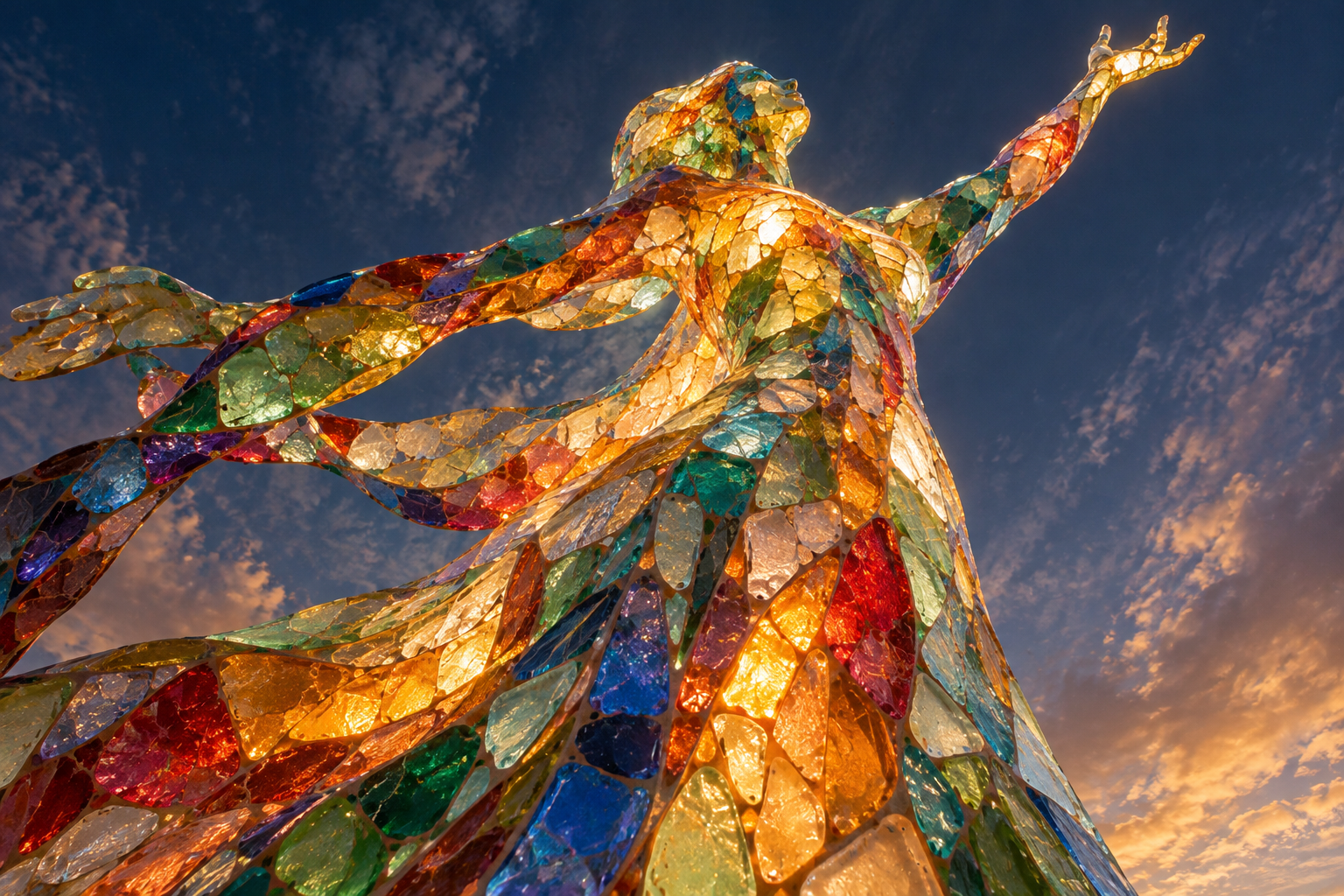
Beloved Community flourishes through healthy and effusive mutuality, as we release self-referentialism, embrace precious personhood, and inhabit deeper connectedness with holistic trust, born out of spiritual intimacy from our communal body of Christ.
Our Sacred Beckoning
How has your understanding of the Body of Christ evolved in your life? Have you experienced it mystically in living community? How?
Have you had any experiences of collective consciousness or “morgans” (communal organs of mystical perception)? How would you describe these experiences?
How does it feel when you think of community as an ecosystem? How do you feel yourself in the midst of that living system?
Statement of WeCreating Authorship
This article was WeCreated with authoring by Luke Healy.
All of the wisdom, creativity, and spiritual emergence in ICN comes from the communal field of wisdom and spirit speaking in and through the “We.”
All text in this article is human-authored without the use of AI, according to our AI policy: 0 out of 10
All Images are open-source, used with permission, or created by ICN